 |
Kalampatzom Water Distribution System
| Applicant | Agua Para La Salud (APLS) | Plan ID: | 215 |
| Status: | approved_accepted | Review Cycle end date: | 2009-08-29 |
The Kalampatzom water system first stage was completed in 2008 which consisted of a 3140 meter conduction line connecting a spring box to a 5 cubic meter distribution tank. The project will serve about 54 families presently and an anticipated 80 to100 fam
The village of Kalampatzom has 54 families. About 12 of these are presently living on the village site that was abandoned during the civil war. The balance of the villagers have plans toreturn to the site when the water system is complete. Most of these villagers are now living in a near by village Janlay.
The children of the Kalampatzom families are presently going to school in Janlay adjacent to the project site.
APS is presently seeking funds from Water For People to augment this project with latrines for each house site.
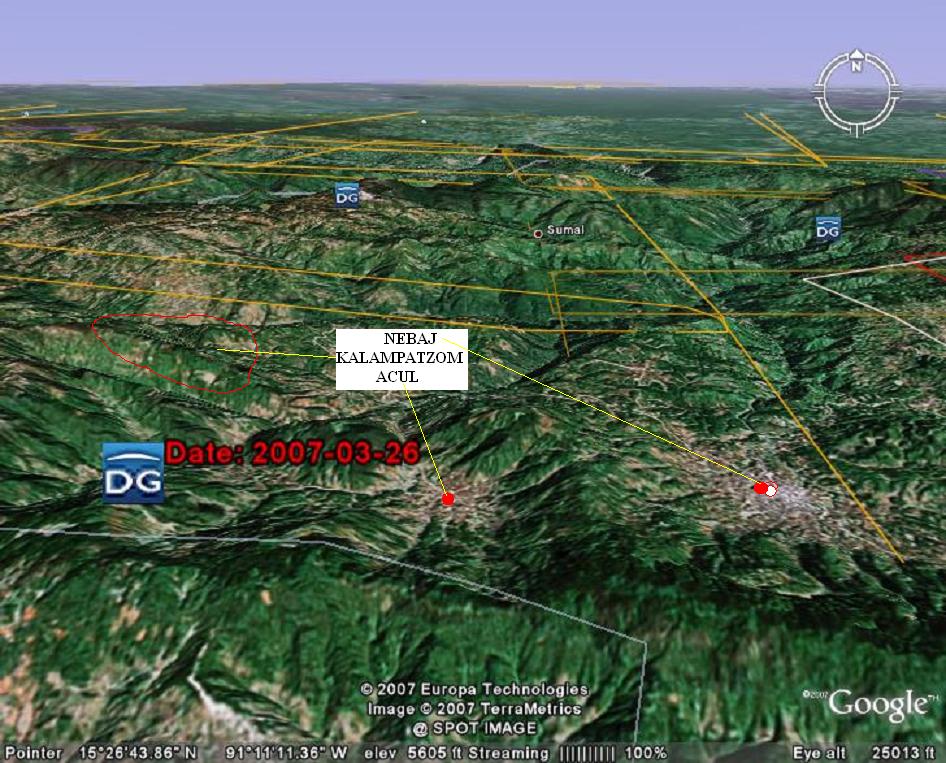
The community of Kalampatzom is located at a direct line distance of 15 kilometers northwest of Nebaj. It is approximately 230 kilometers from Guatemala City in the Cuchumatan Mountains, in the Guatemalan central Highlands. It is about 2000 meters above sea level. The village is approximately 30 minutes by road from Nebaj.
All of the villages in the area were destroyed in the early 1980's as a result of a campaign by the army to defeat the guerilla resistance movement. As a result of this campaign, all structures, houses, water systems, animals, orchards and crops were destroyed. The villagers from Kalampatzom were forced to move to Nebaj and had their houses burned.
At the moment, the community is not totally restructured, but 10 families already came back to live on their fields. About forty other families come daily to work on their land. These 50 families need to walk two hours a day in order to get to the land they work. The village has a school building that was constructed by the government for these families and is shared with the neighboring community of Janlay. It includes about 160 children. Peerwater is presently funding by a separate project the improvement of water facilities in the Janlay school.
Men’s primary occupation is agriculture. As for the women, it is house-keeping. The area around Kalampatzom is considered to be cold land and only supports one crop a year. Most of the crops obtained from their land are used to feed their families, but very often it is not enough to cover the whole year. As a result of this crop shortfall, many of the men or even the entire families migrate to the warmer south coastal areas of Guatemala to find seasonal work with the sugar cane and coffee plantations.
The incidence of water-related diseases and other illnesses is high, especially during the rainy season. For medical attendance, the villagers of the area must walk between 20 to 40 minutes to Janlay or two hours to Nebaj to visit a nurse. Recently, Cuban doctors and medical technicians have been visiting the area providing a better level of health care.
Location
Project Narrative
The Kalampatzom water system first stage was completed in 2008 which consisted of a 3140 meter conduction line connecting a spring box to a 5 cubic meter distribution tank. The project will serve about 54 families presently and an anticipated 80 to100 families in 20 years. Two provisional pipe lines of small diameter will be constructed to serve two sectors of the village with one water station each. We will be installing a pellet chlorination system before the tank to allow the village the option of chlorinating the system should they decide to do so or if they have a health problem in the village.
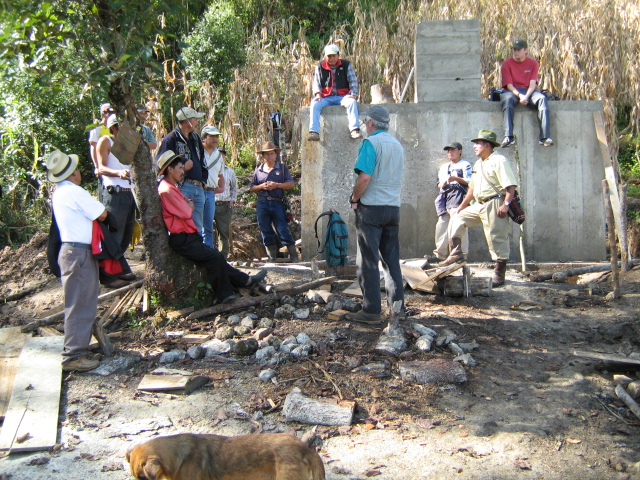
The projects consists primarily of pcv tubing with galavanized 1/2" faucet standpipes at each house. A small concrete pad is included in the project on which the home owner can locate their wash station. The concrete pad has a 3" drain to a soak away pit of three meters covered with double layer treated wood cover and the pit is protected by a barbed wire fence with four trees planted at the corner posts. Pisture is included in the proposal documents.
The first phase has been completed as mentioned in the proposal. This project is the second stage. A third stage is contemplated if funds are available in the future for the construction of latrines.
A contract is signed outlining the community responsibilities and the responsibilities of APS. All members of the village sign the agreement. The APS supervisor and the village committee organize the village for the duration of the project.
Several members of the village are selected to work the entire duration of the project to train them in the instalation and amintenance of the system. The village is required by the contract to determine a fee for water.
The project serves the long term goals of the Guatemalan government to provide water to each family ; provide for confinement of human feces; and delivery of health education.
The project has a health education element in which the APS health promoter gives talks on hygiene issues and distributes
a poster of good and bad hygiene habits.
The northern part of Quiche Department is consisdered by the Guatemalan government as one of the poorest areas in the country. As such the villagers have very few resources other than pysical labor to contribute to the project. The villagers have agreed to provide local materials from their land such as wood for conctere forms, rocks for ballast, and a contingency fund for the project amounting to 10% of the material costs. This fund if not used will become the basis for a water system maintenance program.




Project Financials
See proposal form
Funds are being solicited for a latrine project in the village.
The community will contribute non skilled labor, coordination, and local materials such as wood and rock.
Project Sustainability and Impact Assessment
The village will use funds remaining to start a fund for maintaining the water system the terms of which will be included in the contract with the village prior to construction.
Implementer Details (if other than applicant)
AGUA PARA LA SALUD (APS) is a local non-governmental organization, based in Nebaj, in the department of Quiché. It was founded in 1994. The organization’s activities include the provision of drinking water supplies, and health and hygiene education. It operates in rural villages where there is no existing water infrastructure, and levels of water related diseases are high.
The office is composed of a director, Lynn Roberts, SAFAD and other volunteers, and five field staff.
Lynn also supervises water projects in other areas of Guatemala with Peace Corps and other funding agencies..
Application Summary
| Applicant | : | Agua Para La Salud (APLS) |
| Status | : | approved_accepted |
| Country | : | GUATEMALA Map |
Funding
| Amount Funded | : | $16,800 |
| Funded By:- | ||
| MSSCT | : | $16,800 |
Funds Used |
: | $16,800 |
Funds Available |
: | $0 |
Projects Summary of Application
| Number of Projects | : | 1 |
| Overall Start Date | : | TODO! |
| Overall Completion Date | : | TODO! |
| Date of Last Update | : | 2010-04-26 |