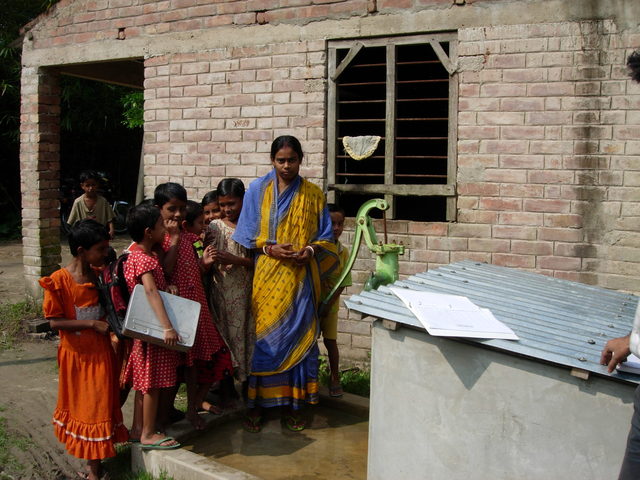
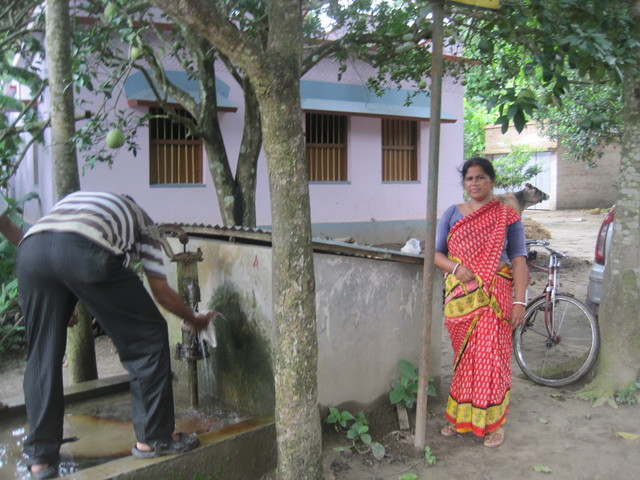
Self-supporting community- based mitigation program that provides arsenic safe water using modified dugwells along with public education on water related health effects.
Photos





MetriX Summary
-
PW055SU3: Number of users (22)
-
PW055SU3: Number of families (22)
-
PW055SU3: Arsenic (7)
-
PW055SU3: Column of Water (ft) (21)
-
PW055SU3: Theoline (Chlorine) supplied (22)
Documents
-
 DSCN4121...
-
 DSCN4131...
-
 DSCN4118...
-
 test_vil...
-
 DSCN6450...
-
 village_...
-
 IMG_6920...
-
 IMG_6921...
-
 IMG_0209...
-
 IMG_0199...
-
 IMG_0202...
-
 IMG_0205...
-
 IMG_0206...




Narrative
(a) Twenty dugwells #PW49 to PW67 were funded by Blue Planet Run Foundation; (b) Four more dugwells were contructed that were pending from the fund (US$5126) received in 2006 and 2007 from Groupe Mosaique of Quebec, Canada (3) and Kallol Club of New jersey (1). (c) The two field workers from Gaighata were involved from May 2007 and will be engaged until April 2008.
-
Suparna Mondol of Project WellImplementation Status: completed Wed 26 Feb 2014, Over 12 Years ago
pw53. Not used . Gave the theoline 500 ml.
-
Farida Bibi of Project WellImplementation Status: completed Thu 20 Feb 2014, Over 12 Years ago
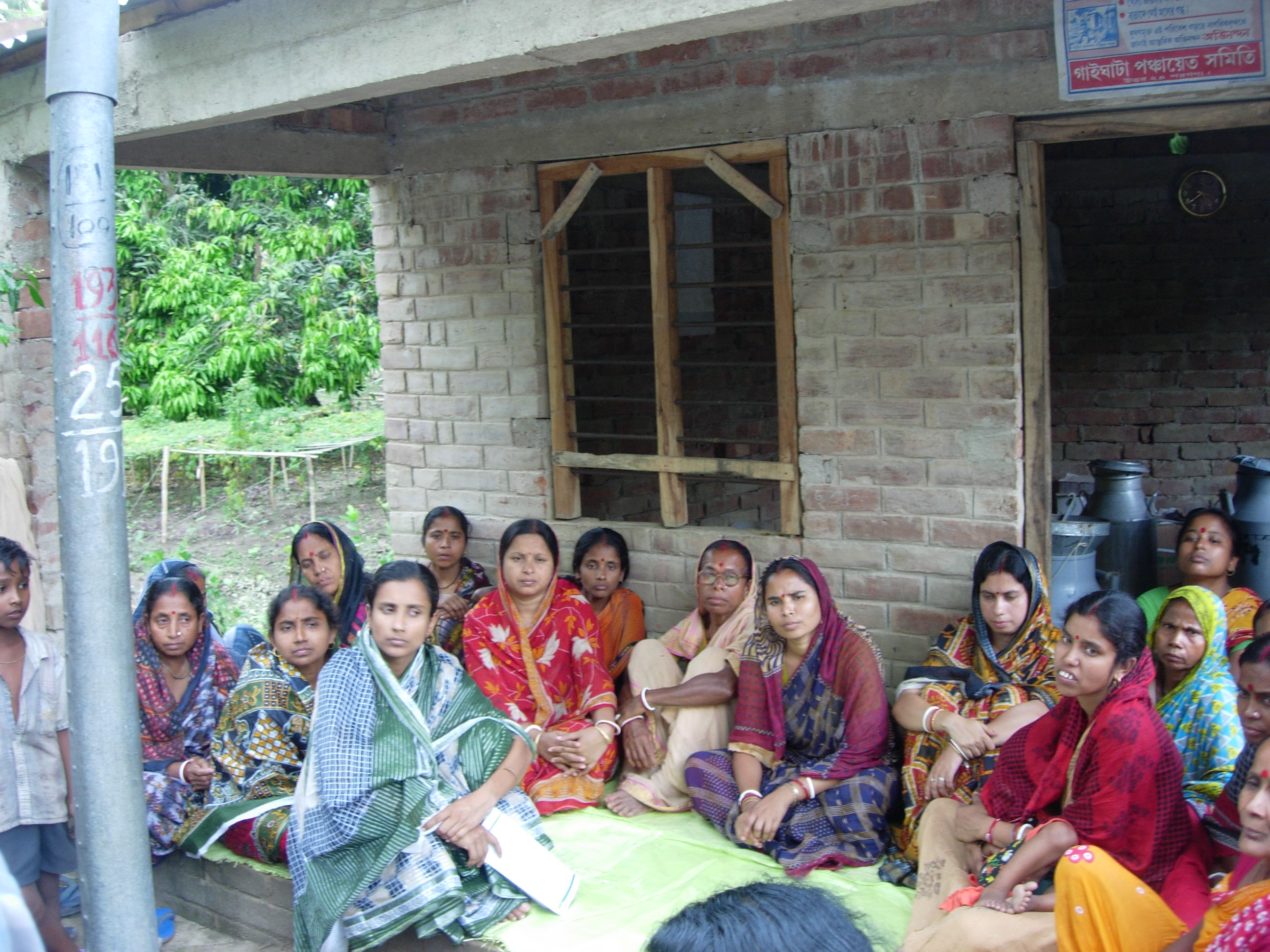
pw60 halth meeting has been finished 10families 41people
-
Suparna Mondol of Project WellImplementation Status: completed Thu 20 Feb 2014, Over 12 Years ago
Pw-58. Health meeting has been finished. Total-families- 10,people-28.
-
Jyotsna Sarkar of Project WellImplementation Status: completed Thu 20 Feb 2014, Over 12 Years ago
meeting has been finished 8families 28people.
-
Farida Bibi of Project WellImplementation Status: completed Wed 19 Feb 2014, Over 12 Years ago
PW50: health meeting has been finished 8 families 41peoples
-
Suparna Mondol of Project WellImplementation Status: completed Wed 19 Feb 2014, Over 12 Years ago
Health meeting has been finished. Total-families- 10,people-48.
-
Jyotsna Sarkar of Project WellImplementation Status: completed Wed 19 Feb 2014, Over 12 Years ago
Health meeting has been finished.7families 39people
-
Jyotsna Sarkar of Project WellImplementation Status: completed Wed 19 Feb 2014, Over 12 Years ago
Health meeting has been finished.7 families 26 people.
-
Suparna Mondol of Project WellImplementation Status: completed Tue 18 Feb 2014, Over 12 Years ago
PW52: Health meeting has been finished. Total-41.visited 9 families.
-
Laltu Mirza of Project WellImplementation Status: completed Fri 07 Feb 2014, Over 12 Years ago
pw50 set checkvalve.nut and head cover today.
-
Laltu Mirza of Project WellImplementation Status: completed Fri 07 Feb 2014, Over 12 Years ago
pw73 set checkvalve,nut today.
-
Suparna Mondol of Project WellImplementation Status: completed Thu 30 Jan 2014, Over 12 Years ago
pw64. 10- 7" water. Used for other purposes. Gave the theoline 300 ml.
-
Suparna Mondol of Project WellImplementation Status: completed Mon 20 Jan 2014, Over 12 Years ago
pw62. 12' 4" water. 8 familise, 34 peoples. Used for cooking and drinking . Gave the theoline 400 ml.
-
Laltu Mirza of Project WellImplementation Status: completed Thu 09 Jan 2014, Over 12 Years ago
pw 56 tin setting today.
-
Suparna Mondol of Project WellImplementation Status: completed Thu 28 Nov 2013, Over 12 Years ago
pw64. Used for others working . Gave the theoline 400 ml.
-
Suparna Mondol of Project WellImplementation Status: completed Thu 28 Nov 2013, Over 12 Years ago
pw53. Used for others working . Gave the theoline 500 ml.
-
Suparna Mondol of Project WellImplementation Status: completed Wed 27 Nov 2013, Over 12 Years ago
pw62. 13' 9" ft water. 8 familise, 34 peoples. Used for cooking and drinking . Gave the theoline 200 ml.
-
Suparna Mondol of Project WellImplementation Status: completed Wed 27 Nov 2013, Over 12 Years ago
Used for cooking and drinking . Gave the theoline 1 lt.
-
Suparna Mondol of Project WellImplementation Status: completed Fri 25 Oct 2013, Over 12 Years ago
pw53. Health meeting has been finished. M-4, F-6, Ch-3.
-
Farida Bibi of Project WellImplementation Status: completed Wed 09 Oct 2013, Over 12 Years ago
yesterday went to pw222and pw223 to give notice about awareness programme next month
-
Shikha Majumdar of Project WellImplementation Status: completed Wed 02 Oct 2013, Over 12 Years ago
pw44 pesting.
-
Farida Bibi of Project WellImplementation Status: completed Wed 18 Sep 2013, Over 12 Years ago
pw64 went for inspection
-
Farida Bibi of Project WellImplementation Status: completed Wed 18 Sep 2013, Over 12 Years ago
went for inspection
-
Suparna Mondol of Project WellImplementation Status: completed Mon 09 Sep 2013, Over 12 Years ago
near pw72. New site no.2, water collection. Pachpota high school/ Gaighata.
-
Suparna Mondol of Project WellImplementation Status: completed Mon 09 Sep 2013, Over 12 Years ago
near pw72. New site no.1, water collection. Pachpota high school/ Gaighata.
-
Laltu Mirza of Project WellImplementation Status: completed Mon 09 Sep 2013, Over 12 Years ago
pw69 set waher,nut ,checkvalve and pipe change. cost of labor Rs.230 and material Rs. 277.
-
Suparna Mondol of Project WellImplementation Status: completed Thu 05 Sep 2013, Almost 13 Years ago
pw62. Gave the handover folder.
-
Suparna Mondol of Project WellImplementation Status: completed Thu 05 Sep 2013, Almost 13 Years ago
pw60. Gave the handover folder.
-
Laltu Mirza of Project WellImplementation Status: completed Thu 05 Sep 2013, Almost 13 Years ago
pw53 set washer,checkvalve,nut and pipe tested today.
-
Laltu Mirza of Project WellImplementation Status: completed Fri 30 Aug 2013, Almost 13 Years ago
pw85 set checkvalve. nut.today.
-
Laltu Mirza of Project WellImplementation Status: completed Thu 29 Aug 2013, Almost 13 Years ago
pw64 set checkvalve today..
-
Suparna Mondol of Project WellImplementation Status: completed Thu 29 Aug 2013, Almost 13 Years ago
pw64. 12 ft water. Gave the theoline 500 ml. Not used.
-
Suparna Mondol of Project WellImplementation Status: completed Tue 20 Aug 2013, Almost 13 Years ago
PW - 72 Health meeting has been finished . M-8, F-11, Ch-6.
aparna has sent this message that is still in her outbox:
@pwx p32.PW72 Health meeting has been finished . M-8, F-11, Ch-6.
-
Shilpi Poddar of Project WellImplementation Status: completed Mon 19 Aug 2013, Almost 13 Years ago
pw55. 500ml theoline was sold. 16 families 61 peoples.
-
Shilpi Poddar of Project WellImplementation Status: completed Sat 10 Aug 2013, Almost 13 Years ago
, pw56. 8ft water, 6 families 26 peoples, good water, drinking and cooking used.
-
Shilpi Poddar of Project WellImplementation Status: completed Sat 10 Aug 2013, Almost 13 Years ago
,pw58. 8'6" water, 5 families 21 peoples, good water , drinking and cooking used.
-
Jyotsna Sarkar of Project WellImplementation Status: completed Thu 08 Aug 2013, Almost 13 Years ago
PW-50, 200ml theoline was sold. 6 families. 30 people. good water used for drinking and cooking.
-
Shilpi Poddar of Project WellImplementation Status: completed Mon 05 Aug 2013, Almost 13 Years ago
Water collection for annual arsenic test
-
Jyotsna Sarkar of Project WellImplementation Status: completed Thu 01 Aug 2013, Almost 13 Years ago
PW72 there is 5ft water.500ml theoline was given.
-
Jyotsna Sarkar of Project WellImplementation Status: completed Thu 01 Aug 2013, Almost 13 Years ago
Maintenance has been dane of pw_72
-
Suparna Mondol of Project WellImplementation Status: completed Fri 19 Jul 2013, Almost 13 Years ago
Panchayet Election-No work today. Projector programme next Friday.
-
Shilpi Poddar of Project WellImplementation Status: completed Thu 04 Jul 2013, Almost 13 Years ago
12ft water. 16 families 62peoples, drinking and cooking usd.
-
Shilpi Poddar of Project WellImplementation Status: completed Wed 03 Jul 2013, Almost 13 Years ago
pw56. 300ml theoline was sold. Rs.6. 10 families 42 peoples, Used for drinking and cooking.
-
Suparna Mondol of Project WellImplementation Status: completed Mon 01 Jul 2013, Almost 13 Years ago
Pw-64 . Water collection.
-
Suparna Mondol of Project WellImplementation Status: completed Mon 01 Jul 2013, Almost 13 Years ago
Pw-60 . Water collection.
-
Suparna Mondol of Project WellImplementation Status: completed Sat 29 Jun 2013, Almost 13 Years ago
. 4 ft water. Not Used Bishnupur/ Gaighata.
-
Suparna Mondol of Project WellImplementation Status: completed Thu 27 Jun 2013, Almost 13 Years ago
Pw-72 . 3 ft water. Need the maintenance.
-
Safikul Molla of Project WellImplementation Status: completed Tue 25 Jun 2013, Almost 13 Years ago
Office attended Champa & Safikul are meeting and office work.
-
Safikul Molla of Project WellImplementation Status: completed Mon 24 Jun 2013, Almost 13 Years ago
Today at the field office meeting Aparna,Shilpi,Biswajit,Animesh,Laltu,Farida,Champa, &Safikul are present.
-
Shilpi Poddar of Project WellImplementation Status: completed Thu 13 Jun 2013, Almost 13 Years ago
pw55. 600ml theoline was sold.
-
Shilpi Poddar of Project WellImplementation Status: completed Thu 13 Jun 2013, Almost 13 Years ago
pw58 300ml. theoline was sold.
-
Safikul Molla of Project WellImplementation Status: completed Wed 12 Jun 2013, Almost 13 Years ago
Today at the field office meeting Aparna,Shilpi,Biswajit,Animesh,Laltu,Farida,Champa, &Safikul are present.
-
Suparna Mondol of Project WellImplementation Status: completed Sat 25 May 2013, About 13 Years ago
pw-62 Good bwater. 4 ft water.Theoline 200 ml. 3 families, 18 people. Used for cooking and drinking. Gazna/ Gaighata.
-
Jyotsna Sarkar of Project WellImplementation Status: completed Thu 02 May 2013, About 13 Years ago
Gave the Arsenic Report. Arsenic Lebel is 0.01pmm.of pw-55
-
Suparna Mondol of Project WellImplementation Status: completed Thu 02 May 2013, About 13 Years ago
pw-56. Gave the arsenic report. Gave the theoline 200 ml. Bishnupur/ Gaighata.
-
AnonymousImplementation Status: completed Tue 30 Apr 2013, About 13 Years ago
PW-55. Health meeting has been finished. Bishnupur
-
Suparna Mondol of Project WellImplementation Status: completed Tue 30 Apr 2013, About 13 Years ago
Pw-55. Health meeting has been finished. M-2, F-4, Ch-4. Bishnupur / Gaighata.
-
Suparna Mondol of Project WellImplementation Status: completed Tue 30 Apr 2013, About 13 Years ago
Pw-55. Health meeting has been finished. M-2, F-4, Ch-4. Bishnupur / Gaighata.
-
Suparna Mondol of Project WellImplementation Status: completed Thu 04 Apr 2013, About 13 Years ago
pw-62.Give the Arsenic report .
-
Shilpi Poddar of Project WellImplementation Status: completed Thu 28 Mar 2013, About 13 Years ago
pw58. 2'6" water. 6families 24people drinking and cooking used.
-
Shilpi Poddar of Project WellImplementation Status: completed Thu 28 Mar 2013, About 13 Years ago
pw56. 5' water. 10 families 42 people drinking and cooking used.
-
Suparna Mondol of Project WellImplementation Status: completed Tue 26 Mar 2013, About 13 Years ago
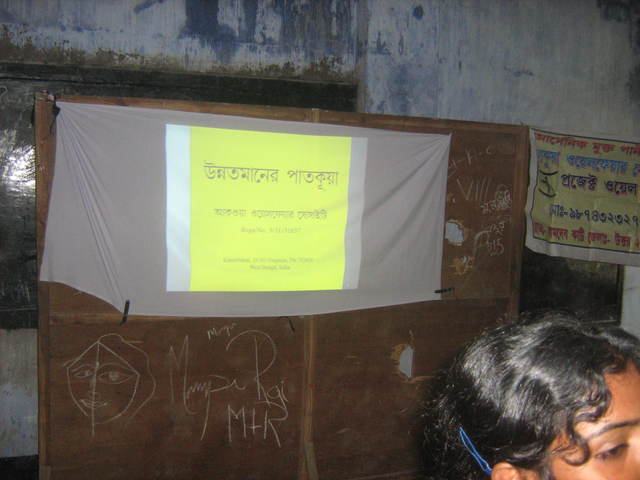
Projector programme neer this dugwell at pw-72. Pachpota prathomic viddhalaya. Studant-23, Teachers-5.Sutia
-
Suparna Mondol of Project WellImplementation Status: completed Thu 21 Mar 2013, About 13 Years ago
Pw-62. Good water. 8 families, 32 people. Used for cooking and drinking. Theoline 300 ml. Gazna.
-
Shilpi Poddar of Project WellImplementation Status: completed Thu 21 Mar 2013, About 13 Years ago
pw55. 10ft water. 14 families 52 people drinking and cooking used .
-
Suparna Mondol of Project WellImplementation Status: completed Thu 21 Mar 2013, About 13 Years ago
pw-64. 3 ft water. 200 ml theoline. Gazna dudh samiti.
-
Suparna Mondol of Project WellImplementation Status: completed Thu 21 Mar 2013, About 13 Years ago
Pw-60 . Good water. 6 families, used for cooking. 300 ml theoline. Bishnupur.
-
Jyotsna Sarkar of Project WellImplementation Status: completed Thu 21 Mar 2013, About 13 Years ago
there is 6ft of water.200ml theoline was sold.3 familie 14People good water used for drinking and cooking. gave the arsenic report. Mahishakati.
-
Jyotsna Sarkar of Project WellImplementation Status: completed Thu 21 Mar 2013, About 13 Years ago
PW72.There is 3 ft water. not used. panchapota
-
Jyotsna Sarkar of Project WellImplementation Status: completed Fri 08 Mar 2013, Over 13 Years ago
Pw-53. Need the maintenance. Nagbari.
-
Suparna Mondol of Project WellImplementation Status: completed Mon 25 Feb 2013, Over 13 Years ago
Pw-64. Water good. Not used.
-
Shilpi Poddar of Project WellImplementation Status: completed Mon 28 Jan 2013, Over 13 Years ago
pw71 . 1 liter theoline is supplied for. 2 families 6 persons
-
Shilpi Poddar of Project WellImplementation Status: completed Thu 17 Jan 2013, Over 13 Years ago
water calecation.
-
Shilpi Poddar of Project WellImplementation Status: completed Thu 17 Jan 2013, Over 13 Years ago
pw56 . Water calecation .
-
Suparna Mondol of Project WellImplementation Status: completed Thu 17 Jan 2013, Over 13 Years ago
Water calection.
-
Suparna Mondol of Project WellImplementation Status: completed Thu 17 Jan 2013, Over 13 Years ago
Water collection.
-
Suparna Mondol of Project WellImplementation Status: completed Sat 29 Dec 2012, Over 13 Years ago
Pw 64. Health meeting is ok. M - 1 F - 9, CH - 8.
-
Suparna Mondol of Project WellImplementation Status: completed Thu 27 Dec 2012, Over 13 Years ago
Pw-62. Health meeting is ok. People 20, M-2,F-10, C- 8.
-
Suparna Mondol of Project WellImplementation Status: completed Sat 22 Dec 2012, Over 13 Years ago
Pw-64. Water 6 ft, 3 familis used for others working.
-
Suparna Mondol of Project WellImplementation Status: completed Sat 22 Dec 2012, Over 13 Years ago
Water 9 ft, 6 familis ,31 people good water. 200 ml theoline was sold.
-
Suparna Mondol of Project WellImplementation Status: completed Sat 22 Dec 2012, Over 13 Years ago
Pw-62. Water 9 ft, 6 familis ,31 people good water. 200 ml theoline was sold.
-
Shilpi Poddar of Project WellImplementation Status: completed Sat 22 Dec 2012, Over 13 Years ago
pw56 . Surva , 9famili 47 people drinking and cooking used .
-
Suparna Mondol of Project WellImplementation Status: completed Mon 17 Dec 2012, Over 13 Years ago
Pw56. Health meeting is ok. People 17.
-
Suparna Mondol of Project WellImplementation Status: completed Sat 15 Dec 2012, Over 13 Years ago
58. Health meeting is ok. People 20.
-
Suparna Mondol of Project WellImplementation Status: completed Sat 08 Dec 2012, Over 13 Years ago
Pw64. Good water, others working.
-
Suparna Mondol of Project WellImplementation Status: completed Sat 08 Dec 2012, Over 13 Years ago
Pw64. Good water, others working.
-
Suparna Mondol of Project WellImplementation Status: completed Sat 08 Dec 2012, Over 13 Years ago
pw62, good water, 6 familis used by driking and cooking.
-
Suparna Mondol of Project WellImplementation Status: completed Mon 03 Dec 2012, Over 13 Years ago
.Good water, 17 ft water, 6 familis used for cooking and drinking pw 52.
-
Safikul Molla of Project WellImplementation Status: completed Sat 01 Dec 2012, Over 13 Years ago
attented Farida,,Champa&Safikul are meeting and arsenik test.
-
Shilpi Poddar of Project WellImplementation Status: completed Sat 01 Dec 2012, Over 13 Years ago
pw55 400ml theoline was given .
-
Shilpi Poddar of Project WellImplementation Status: completed Sat 01 Dec 2012, Over 13 Years ago
pw58 500ml theoline was given .
-
Meera Hira-Smith of Project WellImplementation Status: completed Tue 27 Nov 2012, Over 13 Years ago
p32 pw53 constr 2007 now not used level12ft. water is turbid need to make detachable pipe of 2ft. Check valve and washer nd to be fixed.
-
Meera Hira-Smith of Project WellImplementation Status: completed Tue 27 Nov 2012, Over 13 Years ago
p32 pw73 gd water 13 families using for cooking and drinking
-
Shilpi Poddar of Project WellImplementation Status: completed Tue 27 Nov 2012, Over 13 Years ago
p32 pw 55 . Hand over packet .
-
Shilpi Poddar of Project WellImplementation Status: completed Tue 27 Nov 2012, Over 13 Years ago
p32 pw56 . Hand over packet .
-
Shilpi Poddar of Project WellImplementation Status: completed Tue 27 Nov 2012, Over 13 Years ago
pw58 . Hand over packet .
-
Safikul Molla of Project WellImplementation Status: in_progress Wed 21 Nov 2012, Over 13 Years ago
Today at the field office meeting Aparna, Shilpi, Sikha, Ranajit, Animesh, Laltu, Farida, Champa, & Safikul are present.
-
Jyotsna Sarkar of Project WellImplementation Status: in_progress Tue 20 Nov 2012, Over 13 Years ago
Gave the hand over packege.
-
Suparna Mondol of Project WellImplementation Status: in_progress Tue 20 Nov 2012, Over 13 Years ago
Good water, 5 familis, 21 poeple for cooking.
-
Suparna Mondol of Project WellImplementation Status: in_progress Mon 19 Nov 2012, Over 13 Years ago
Good water. 7 familir, 31 people by the used drinking & cooking. Gave the Hand over pacage.
-
Suparna Mondol of Project WellImplementation Status: in_progress Mon 19 Nov 2012, Over 13 Years ago
Pw 60 Good water. 14 familir, 52 people by the used drinking & cooking. Gave the Hand over pacage.
-
Safikul Molla of Project WellImplementation Status: in_progress Mon 19 Nov 2012, Over 13 Years ago
Today at the field office meeting Mrs Meera Smith,Animesh,Laltu,farida,Champa, prasun &Safikul are present.
-
Jyotsna Sarkar of Project WellImplementation Status: in_progress Sun 18 Nov 2012, Over 13 Years ago
Gave the hand over packet.
-
Jyotsna Sarkar of Project WellImplementation Status: completed Mon 12 Nov 2012, Over 13 Years ago
given the handover package
-
Suparna Mondol of Project WellImplementation Status: completed Mon 12 Nov 2012, Over 13 Years ago
Pw-62: Good water, 6 families, 31 people used for cooking & drinking.
-
Suparna Mondol of Project WellImplementation Status: in_progress Thu 08 Nov 2012, Over 13 Years ago
There is 13 ft of water. 400 ml theoline was sold. 14 familis . Good water used for drinking & cooking.
-
Jyotsna Sarkar of Project WellImplementation Status: in_progress Thu 08 Nov 2012, Over 13 Years ago
people are not using because the water is turbid
-
Safikul Molla of Project WellImplementation Status: in_progress Wed 07 Nov 2012, Over 13 Years ago
Weekly office meeting: Attended by Animesh, Laltu, Farida, Shilpi, Champa, Aparna, & Safikul. Meeting is ok.
-
Suparna Mondol of Project WellImplementation Status: completed_partial Fri 19 Oct 2012, Over 13 Years ago
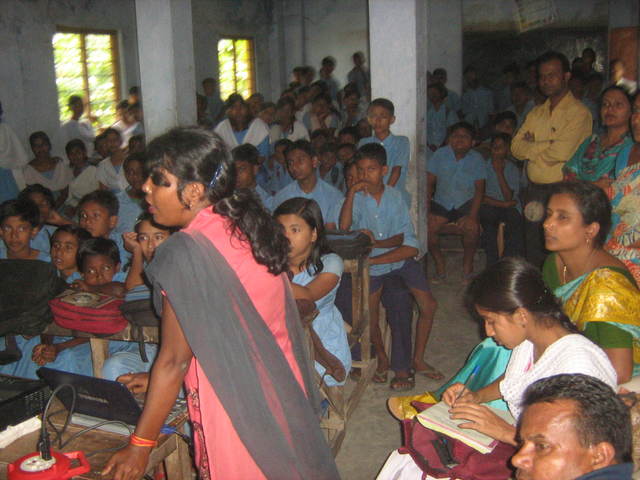
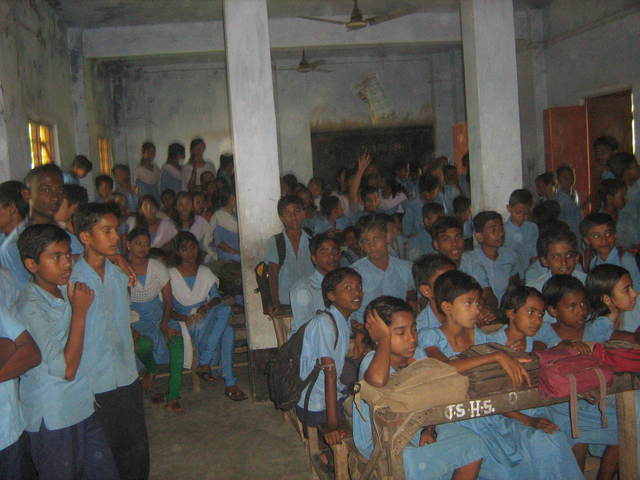
Projector program at jhowdanga sammilani high school ( H S) near PW52.150 students and 5 teachers and one non-teaching staff attended the program, The total number of students in the school is 1263 and 28 teachers. Program ok.
-
Farida Bibi of Project WellImplementation Status: in_progress Fri 19 Oct 2012, Over 13 Years ago
Projector program- jhowdanga sammilani high school (HS).
-
Paramita Guha of Project WellImplementation Status: in_progress Thu 17 May 2012, About 14 Years ago
pw68 of 2007 was used by 132 consumers and it could not be used for a well due to shortage of water. Dredging of 21.5 ft has been done today 17/5/12 and the water can be consumed from tomorrow. Thanks Paramita?
-
Meera Hira-Smith of Project WellImplementation Status: completed_partial Mon 17 Oct 2011, Over 14 Years ago
status of dugwells constructed in 2007.
Out of 24 dugwells 17 are being used and due to technical problems and ignorance of some prospective communities 7 have been closed and abandoned. Project Well can provide exact dugwell ID numbers upon request.
-
Meera Hira-Smith of Project WellImplementation Status: completed Thu 23 Jun 2011, Almost 15 Years ago
One of the randomly selected dugwell for the bimonthly test for arsenic.
16 families comprised of 67 members are using this well water.
-
Meera Hira-Smith of Project WellImplementation Status: completed Thu 23 Jun 2011, Almost 15 Years ago
PW50: One of the randomly selected dugwell for the bimonthly test for arsenic.
2 families comprised of 10 members are using this well water. It was raining very badly hence the photographer could not take any picture at this site.
-
Meera Hira-Smith of Project WellImplementation Status: completed Thu 23 Jun 2011, Almost 15 Years ago
One of the randomly selected dugwell for the bimonthly test for arsenic.
This well was visited by the technical manager and the project manager on the same day. The water quality is normal and according to the june report 3 families comrised of 11 members are using this well.Need to have health meetings here.
-
Meera Hira-Smith of Project WellImplementation Status: complete_unsuccessful Thu 23 Jun 2011, Almost 15 Years ago
visit to see the latest status after the closure survey
This well was visited by the technical manager and the project manager on the same day. This well needs to be closed since pipeline is being used. People do not wish the dugwell to be filled with dirt for they fear that the pipeline may not function properly sometimes when they can use the dugwell water.
-
Meera Hira-Smith of Project WellImplementation Status: completed Mon 12 Oct 2009, Over 16 Years ago
PW68JLS1 was visited on June 17 2009
118 people from 20 families use water from this dugwell. The taste of water is better than deep tubewell and regarding people's mindset: there is no water body visible near this dugwell hence people are not reluctant to use water from this dugwell that was constructed in 2007.
-
Ayse ErcumenImplementation Status: completed Wed 05 Nov 2008, Over 17 Years ago
Project Well Visit by Ayse Ercumen (UC Berkeley Graduate Student in the School of Public Health) June 20, 2008
I visited the Project Well field site in Maslandpur in June 2008. The manager of field operations, Mr. Dennis, gave me a tour of the project area and answered my questions. He informed that, to date, 34 wells had been installed in Gaighata with 10 more planned for 2009, and 48 in Deganga/Habra1.
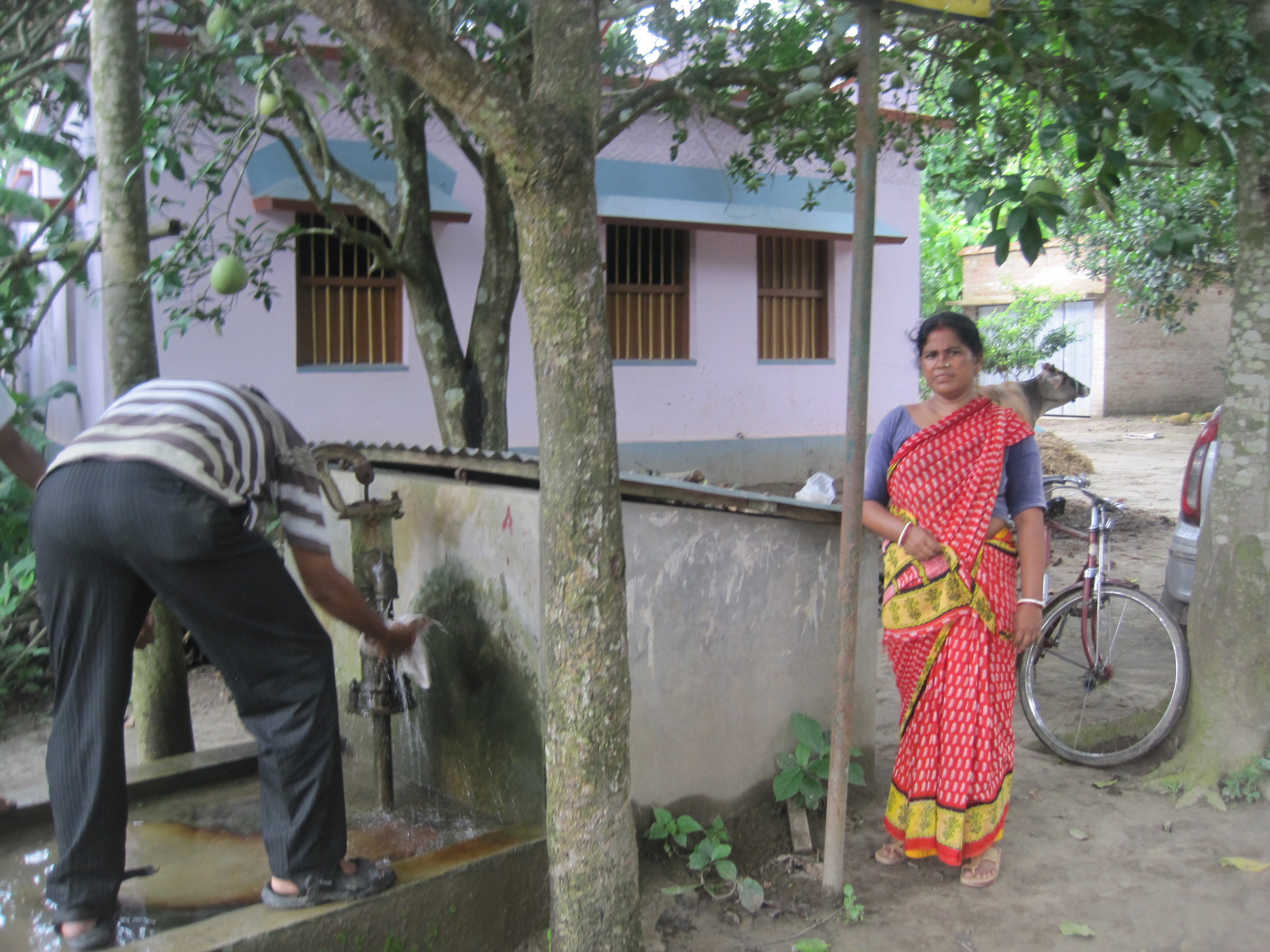
The well that I visited was fully functional and in operation, with users coming to collect water during the time I was there. Mr. Dennis informed me that 20 to 25 families share a well, and the wells are especially in demand by families that have arsenic-induced skin lesion cases. Mr. Dennis also pointed out that because the wells tap into shallow aquifers that primarily collect infiltrating rainwater, they may sometimes run dry in the rainless season. Users may have to depend on other water sources during that time, and the volume of water available does affect the number of users. However, records show that only 10% of the wells go completely dry. The well that I looked at had been recently chlorinated at the time of my visit. The sample from the well did not have any turbidity, objectionable taste or odor.
-
Meera Hira-Smith of Project WellImplementation Status: completed Mon 28 Jul 2008, Almost 18 Years ago
PWVD1: Testimony of Shantona Das of PW54_Gaighata, India.
The dugwell PW54 was constructed in 2007 that was funded by BPR. According to the monitoring report of June 2008 fifteen families (60 members) are using the dugwell in addition to a school that has 209 pupils. Please view the video, PWVD1, to hear Mrs. Shantona Das' testimony
- Impact Assessment (M&E) Phase Project completed on 31 Dec, 2007 Implementation Phase
- Implementation Phase Project started on 1 Jan, 2007 Preparation Phase
Self-supporting community- based mitigation program that provides arsenic safe water using modified dugwells along with public education on water related health effects.
Narrative
(a) Twenty dugwells #PW49 to PW67 were funded by Blue Planet Run Foundation; (b) Four more dugwells were contructed that were pending from the fund (US$5126) received in 2006 and 2007 from Groupe Mosaique of Quebec, Canada (3) and Kallol Club of New jersey (1). (c) The two field workers from Gaighata were involved from May 2007 and will be engaged until April 2008.
Photos
MetriX Summary
-
PW055SU3: Number of users (22)
-
PW055SU3: Number of families (22)
-
PW055SU3: Arsenic (7)
-
PW055SU3: Column of Water (ft) (21)
-
PW055SU3: Theoline (Chlorine) supplied (22)
Documents
-
DSCN4121...
-
DSCN4131...
-
DSCN4118...
-
test_vil...
-
DSCN6450...
-
village_...
-
IMG_6920...
-
IMG_6921...
-
IMG_0209...
-
IMG_0199...
-
IMG_0202...
-
IMG_0205...
-
IMG_0206...
Sustainability
Creating and measuring long-term impact
For 20 dugwells USD 680
Other Issues
Unusual and unexpected issues faced during project execution
1st week Jan: Two meetings were held at the end of last year at the Block Development Office of Gaighata with the BDO officer in charge, Medical Officer in charge, Dr. Mondol, and some Panchayet Pradhans that went well. They have assured their cooperation in the arsenic prone panchayets of their block. They would guide and assist in choosing the sites. There are some Womens' Cooperative of 'Milk producers', who according to the Karmadakshya, (the officer in charge) could form CBGs. In January two person from the Gaighata Block are being recruited for training starting with how to select the sites for dugwells by organizing meetings in the areas with the prospective users educating the users about use of dugwell water compared with arsenic contaminated tube well water and responsibility to be taken up by the CBGs on maintenance of the dugwells etc.
The next step would be assigning the identity number of the dugwell sites and recording the geocodes of the location, testing nearby tubewells to confirm presence of arsenic followed by recording names, age, and profession of the users in registers.
Jan 18th: So far 11 prospective sites have been selected through the office of the Block Development and the Panchayets. More to be seen by next week. By the end of February all 20 sites are planned to be finalized by the experts though the construction will be not until in April. Between February and April village meetings will be held where numerous villagers will be benefitting the knowledge of impact of arsenic contaminated water and arsenic safe water.
September 14, 2007: Construction of 20+4 dugwells were completed in June just before the onset of monsoon. There was a delay of one week due to non-availability of coarse sand. Sand is in high demand due to increase in construction work in the outskirts of the city of Kolkata. Followed by the excavation the masonry (housing) job was completed. All the indicator boards are up now. The arsenic analysis of all the dugwells are done in the end of August. As soon as all the reports are put together they will be available. Due to heavy rainfall even in the ‘Bhadro’ month, the month generally has a break of rain during the monsoon period; the water in the newly constructed dugwells is pretty turbid. People are eager to start using the dugwells but due to high turbidity they cannot. They are advised to use only for cooking. The disinfectant is being administered to control development of any bacteria and people are advised to pump the water as much as possible. So far to hand over the dugwells to community based groups, only three CBG meetings have been held in the presence of Dr. Mondol, the public health officer of the Gaighata BDO (block development office). Others will be held as soon as people are able to start using the dugwell water.
The map with the location of the dugwells can be seen on the project well website. Pictures will be taken, next week, with a borrowed digital camera and report will be put up as soon as they are recieved.
December 3: The pictures of the newly constructed dugwells are available on the website that also include data on location (geocodes), property donor, results of water analysis (some are pending) and the number of users. The number of consumers will increase gradually through health meetings in the areas where there is lack of information on effects of arsenic-safe-chlorinated-water. Construction of all the 20+4 dugwells were constructed well except one. There is a crack on the housing portion of PW65/RMN1 at Pipley Dakshin Para of Ramnagar Panchayat after the monsoon rain which is speculated to be due to an unknown cowdung pit or Khatal at the site because the color of the water is yellow and also has a foul smell. There was no information about this pit from the local people during the site selection. This dugwell is under-observation and being treated with lime and alum and will be tested for chemicals that may be present in the water. Apart from technical fault of PW65 heads of 2 tubewell pumps are broken due to overpumping that are being replaced. At some sites PVC pipes are being installed to drain the run offs to avoid accumulation of stagnant water close to the dugwell. These viallges are in the remote areas where the nearest bus road is more than 10 km away. Installation of piped water is just a dream for those who live in these areas.
In the area where 40 dugwells are existing (PWSET1) 38 health meetings, 'sashtho sawbha', have been completed since mid-November 2006. This is the first round where the audio Visual aids are being used. The VCD, (#PW1) containing information of the dugwell program and why is it necessary to chlorinate the water with information on bacteria and its harmful effects are discussed. Practice of proper personal hygiene is also discussed. In the next round of health meetings a different topic will be selected.
Learnings
Knowledge of project and process for sharing
Before construction of every dugwell an additional narrow hole will be dug to get the lithological log of the depth of layers of clay and sand. This will enable to assess the possible depth of the dugwell and how many small and big rings will be needed and hopefully can detect historical cowdung pit and avoid the site.
Impact
People Impacted: 505
People Getting Safe Drinking Water: 505
According to the register record of July 2011 the total consumers=505; Families=165; Male=283, Female=301, children <5 =40 and students = 168.
____________________
Out of 24 dugwells register record shows: Total consumers=567; Male=299, Female=268; Student=106 and Children <5=21. In June 2008 the total number of families is 215 and beneficiaries is 1038 using 21 dugwells. The registers are being appended.
People Getting Other Benefits: 727
Seven employees and more than 720 persons received knowledge on the benefits of drinking arsenic safe water and treated dugwell water. They were also shown slides and given lectures on practice of proper personal hygiene to prevent themselves from diseases caused by water borne and food borne bacteria.
Maintenance/Operating Costs Annual, in US$: $34
Creating and measuring long-term impact
For 20 dugwells USD 680
Implementer: Project Well & Aqua Welfare Society
Aqua Welfare Society, AWS, is the partner NGO. Their office is based in the North 24 Parganas. The 8 honorary board members are located in Kolkata. There are only 5 field workers who are interacting with the villagers and beneficiaries, training the users on maintenance of the dugwells, organizing village meetings and health meetings. A technical advisor of AWS is based in Kolkata who visits the village occasionally and one awareness programmer who is in charge of awareness programs in the communities and educational institutions. There is an accountant and also a data entry person on part time basis.
Funding
- funded:
- $14,308
- Final Cost:
- $17,059
- edit $14,308:
- Blue Planet Network
Plan/Proposal
Photos
MetriX Summary
-
PW055SU3: Number of users (22)
-
PW055SU3: Number of families (22)
-
PW055SU3: Arsenic (7)
-
PW055SU3: Column of Water (ft) (21)
-
PW055SU3: Theoline (Chlorine) supplied (22)
Documents
-
DSCN4121...
-
DSCN4131...
-
DSCN4118...
-
test_vil...
-
DSCN6450...
-
village_...
-
IMG_6920...
-
IMG_6921...
-
IMG_0209...
-
IMG_0199...
-
IMG_0202...
-
IMG_0205...
-
IMG_0206...