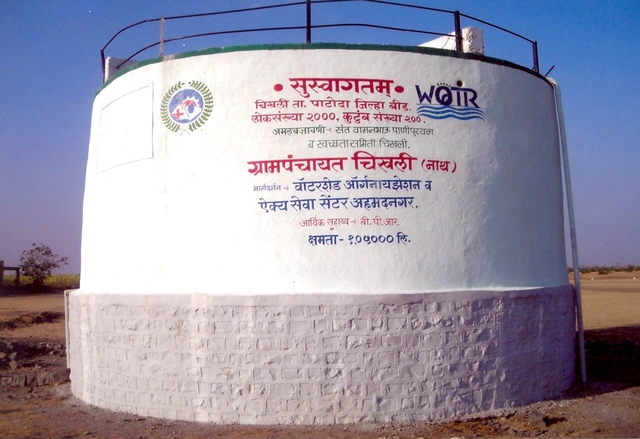
The village of Chikali has 152 households and a population of approx. 1,200 inhabitants. Since Beed district comes under the drought prone area, the agriculture has suffered.We have implemented a water system to aid them in their water crisis.




- Impact Assessment (M&E) Phase Project completed on 31 Dec, 2006 Implementation Phase
- Implementation Phase Project started on 1 Apr, 2006 Preparation Phase
The village of Chikali has 152 households and a population of approx. 1,200 inhabitants. Since Beed district comes under the drought prone area, the agriculture has suffered.We have implemented a water system to aid them in their water crisis.
Sustainability
Creating and measuring long-term impact
691
1) Out of the total 156 families, 149 families have contributed a total of USD 1,693 (per family USD 11.36 - one time contribution) towards the Maintenance Fund. This amount has been deposited in the bank in the name of Water Committee (Pani Samitee) and will be used for the major repairs and replacement in future.
2) The annual operational recurring costs is USD 1064 which will be collected from each family @ USD 7.10 every year (which works out to USD 0.60 per month/family)
Other Issues
Unusual and unexpected issues faced during project execution
Promotion of kitchen gardens and soakpits has been initiated in the villages.
Learnings
Knowledge of project and process for sharing
-The drinking water activity has helped the village community to come together for a common cause and helped to strengthen their unity and integrity.
- the illiterate rural women are capable to implement honestly and parsimoniously large projects with big budgets by maintaining transparency if their capacities are built through training interventions and given opportunity to implement the projects.
- if the drinking water problem is identified and the work is initiated by the women , the strong support and cooperation is possible from the local governance (Gram Panchyat), CBOs and men folk irrespective of village politics, groupism and bureaucratic interference.
- The drudgery of the women has been reduced and now they have time for other and farm activities.
- The implementing agency should be clear about the non-compromisable (peoples contribution, quality of work, maintenance atleast of one year in advance) and should try to achieve these through participatory methods.
Impact
People Getting Safe Drinking Water: 1002
families : 160
men : 339
women : 307
children : 356
School Children Getting Water: 356
children :
boys 176
girls : 180
Maintenance/Operating Costs Annual, in US$: $650
Creating and measuring long-term impact
691
1) Out of the total 156 families, 149 families have contributed a total of USD 1,693 (per family USD 11.36 - one time contribution) towards the Maintenance Fund. This amount has been deposited in the bank in the name of Water Committee (Pani Samitee) and will be used for the major repairs and replacement in future.
2) The annual operational recurring costs is USD 1064 which will be collected from each family @ USD 7.10 every year (which works out to USD 0.60 per month/family)
Funding
- funded:
- $18,982
- Final Cost:
- $20,880
- edit $18,982:
- Blue Planet Network