Objectives of the project: Operational objective: Sustainable improvement of the living conditions of the rural population through an improved access to drinking water and sanitation;Strategic objective: Stimulation of IWRM in the catchment area of Lake G

Narrative
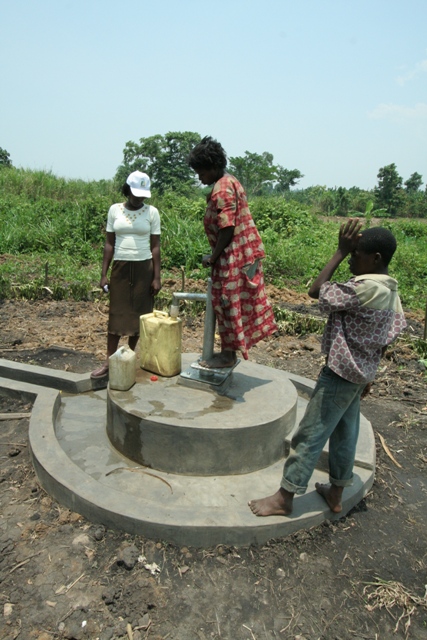
PROTOS has in partnership with JESE and FORUD been building 39 water points consisting of shallow wells and, protected springs. The implementation of this infrastructure has been done in a participatory approach with clear roles for the local communities (beneficiaries) and local authorities. Community authorities have been trained in tendering and external contractors were granted the works. The beneficiaries were trained to form representing water user committees in the initial phase of the projects in order to improve ownership.
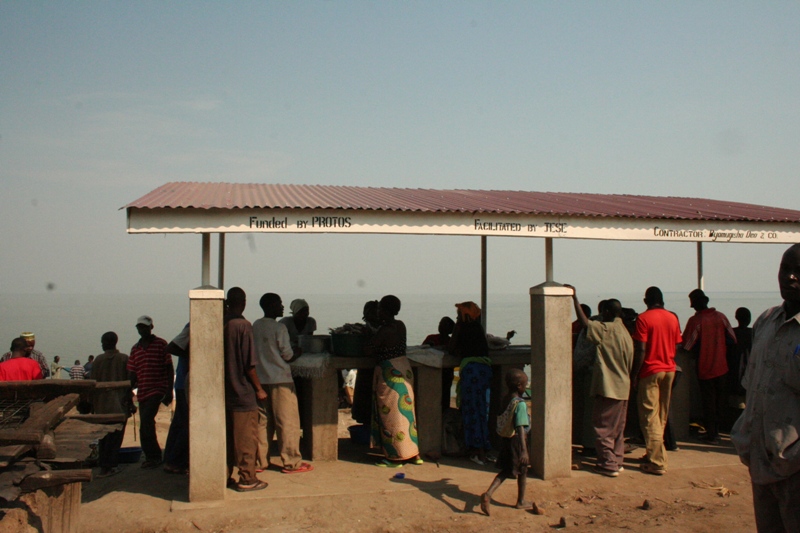
Next to this main infrastructure component of the program PROTOS has integrated other water technologies in its program, being in a smaller scale and for different purposes (not only for human consumption). Good examples are the fish slabs on fishermen landing sites for allowing clean processing of the fish and building Ecosan latrines on public places like landing sites and market places.
Pilots have been done in building rainwater harvesting tanks at both institutional (school) and household level.
Related to hygiene and sanitation knowledge, a lot of effort has been done to create awareness and to sensitize the people in the intervention, using different methods :
- Supporting and equipping drama groups who are performing on H&S topics in the area
- Training the water user committees
- Perform household visits and build demo homes
- Train hygiene promoters and introduce PHAST sessions (Participatory Hygiene And Sanitation Transformation).
- Start school hygiene groups and health classes using C2C (Child to Child) approach
- …
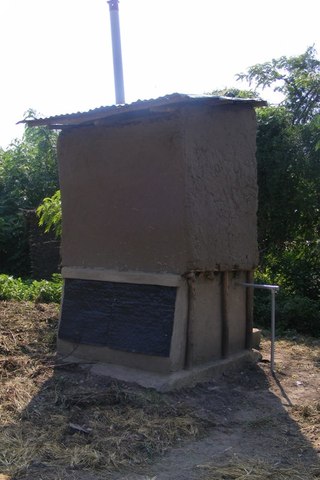
The Hygiene and sanitation component of the program was also linked with the infrastructure component which is again on both institutional level (e.g. multi stance Ecosan in schools and public latrine on market) and household level (mainly household Ecosan toilets). The Ecosan technology has shown to be well accepted after the different sensitization and training being done and its different benefits are more and more understood (use of urine – composted fecal material as compost). Furthermore it was shown that on the landing sites where ground water tables are very high, this technology is the best fit. Even on the District level it was decided that for these areas it is “the” technology to be promoted (allowed) by all development partners.
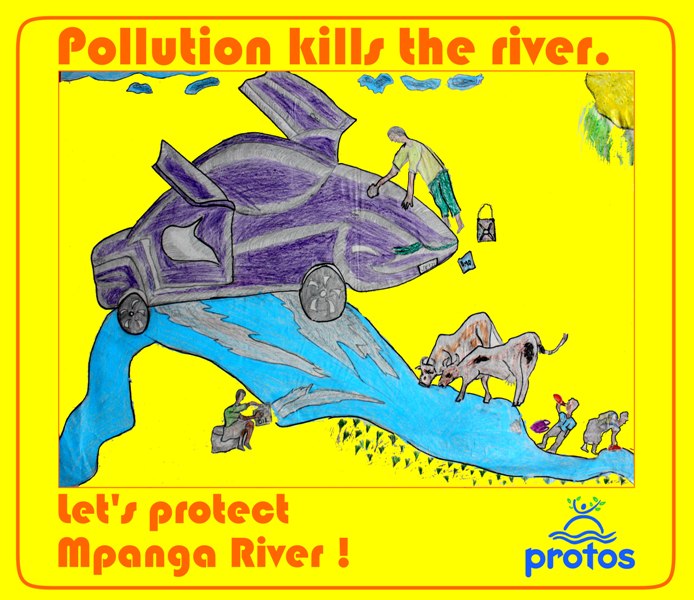
Last but not least, PROTOS has played a prominent role in creating the first decentralized “Integrated water Resources Management” pilot project in Uganda. Several representatives of involved local district authorities and representatives of LAGBIMO ( Lake George Basin Integrated Management Organisation) were put together on the table with representatives of DWD Directorate of Water Development (body of central authorities Uganda) to form a Catchment Committee for the river Mpanga, the most important river of Lake George basin. They are working together on 4 issues/threaths for the river. It is the first decentralized IWRM Committee working in Uganda: it is closely followed by central authorities and promoted as the good practice case for other basin authorities starting activities.
-
Marc Despiegelaere of ProtosImplementation Status: completed Tue 13 Apr 2010, About 16 Years ago
Final report april 2010 PWX BPR ID 73 Lake George Uganda
FINAL REPORT ID 73
INTEGRATED WATER RESOURCES MANAGEMENT
Lake George Uganda
Period:01/09/2007 – 30/09/2009
Name* (Limit 150 letters)
Integrated Water Resource Management Lake George Uganda PWX application ID: 73
Project Summary* (Limit 256 letters)
PROTOS in Uganda was engaged in the implementation of Integrated Water Resource Management in the Lake George Region. In this context the provision of drinking water by installment of specific infrastructure was a major part of the program. The infrastructure mainly consised of shallow wells and protected springs. Due to the complementarities to safe drinking water providence, PROTOS also focused on safety and hygiene training and basic infrastructure. The BPR contribution was mainly used for the realization of drinking water infrastructure in communities and schools.PROTOS works in Uganda in close cooperation with two local NGO’s, being JESE and FORUD. The cooperation with these organizations provides the project “on the field experience” and an adequate platform for the supporting activities; such as training in hygiene and infrastructure maintenance.
Start DateActual/Estimated 1/9/2007
Completion Date Actual 30/09/2009
Amount Funded Through PWX : 25700 USD
Remaining Amount : 0 USD
Amount Allocated (towards this project from PWX funding) : 25735USD
Total Project CostFull, actual cost of the Project in USD. : 622468 USD
Total No. of People Impacted
See below : 22.379
No. of People Getting Drinking Water Enter Details Number of families, children, women, etc. and source of data
Period 1/9/2008 – 31/9/2009 : approx. 4750 persons (17 shallow wells and 1 protected spring) Details : 792 families, 387 men, 405 women
4 rainwater tanks in schools or 3335 pupils
Total : 3335 pupils + 40 teachers
Period 1/7/2007 – 31/08/2009: 5000 persons ( 9 shallow wells, 2 protected springs)
Total : 13125 persons
Source of data : M&E reports, baseline study, population data and assumptions.Number of School Children Getting Water Enter Details Number of children and staff, etc. and source of data
3335 pupils + 40 teachers
Source of data : M&E reports partners, baseline study and assumptions
No. of People Getting Sanitation Enter Details Number of families, children, women, etc. and source of data
Ecosan built at school level : 3 (6 stance Ecosans) 1135 pupils + 26 teachers
Household Ecosan built (and households trained) : 51 families or 306 persons
8 public Ecosans built: approx. 800 persons
Total: 2267Different trainings/awareness/sensitization programs
Training in schools (C2C) : 12 schools or approx 720 pupils
Training and awareness session at household levels : 1688 households or approx. 10128 persons
Training in villages (PHAST, ..) : 42 PHAST trainers formed, 1604 persons trained
Water user committees trained on H&S : 15 WUC or 525 persons
Village hygiene promoters formed : 54 persons
4 demo homes built with 128 persons trained
Total : software for 13159 persons
Source of data : M&E reports partners, baseline study and assumptionsNo. of People Getting Other Benefits Enter Details Number of families, children, women, etc. and source of data
Primary Focus :
- Local leaders :
o Training on project planning for 118 local leaders on village, subcounty and county level
o Training on tendering for 37 local leaders
o …
- Training and support of 3 local drama groups on hygiene, sanitation and safe drinking water
- Training of a women group on construction of rainwater harvesting tanks for households and construction of 4 household tanks
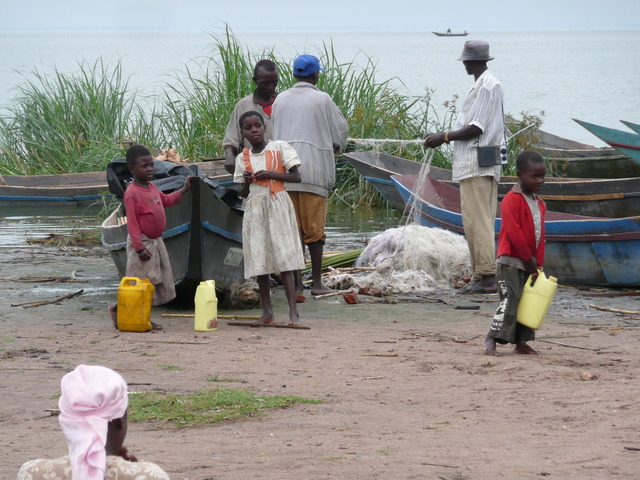
- Better hygiene on landing site : construction of two fish slabs for cleaning fresh fish
- Cattle holders : water for cattle : construction of 2 drinking throughs on shallow well outlets
- Training of 25 local pump technicians
- ..
Secondary Focus
- Masons trained in construction of household Ecosan : 8
- Households adopting Ecosan technology : 6 household Ecosans and 1 public at school.
Tertiary Focus
- Representatives of local district authorities , Lagbimo and DWD representatives for IWRM “integrated water resources management “ of Mpanga river in the Lake George basin: 15
Narrative Describe the implementation and initial impacts. Include changes from the application.
PROTOS has in partnership with JESE and FORUD been building 39 water points consisting of shallow wells and, protected springs. The implementation of this infrastructure has been done in a participatory approach with clear roles for the local communities (beneficiaries) and local authorities. Community authorities have been trained in tendering and external contractors were granted the works. The beneficiaries were trained to form representing water user committees in the initial phase of the projects in order to improve ownership.
Next to this main infrastructure component of the program PROTOS has integrated other water technologies in its program, being in a smaller scale and for different purposes (not only for human consumption). Good examples are the fish slabs on fishermen landing sites for allowing clean processing of the fish and building Ecosan latrines on public places like landing sites and market places.
Pilots have been done in building rainwater harvesting tanks at both institutional (school) and household level.
Related to hygiene and sanitation knowledge, a lot of effort has been done to create awareness and to sensitize the people in the intervention, using different methods :
- Supporting and equipping drama groups who are performing on H&S topics in the area
- Training the water user committees
- Perform household visits and build demo homes
- Train hygiene promoters and introduce PHAST sessions (Participatory Hygiene And Sanitation Transformation).
- Start school hygiene groups and health classes using C2C (Child to Child) approach
- …
The Hygiene and sanitation component of the program was also linked with the infrastructure component which is again on both institutional level (e.g. multi stance Ecosan in schools and public latrine on market) and household level (mainly household Ecosan toilets). The Ecosan technology has shown to be well accepted after the different sensitization and training being done and its different benefits are more and more understood (use of urine – composted fecal material as compost). Furthermore it was shown that on the landing sites where ground water tables are very high, this technology is the best fit. Even on the District level it was decided that for these areas it is “the” technology to be promoted (allowed) by all development partners.
Last but not least, PROTOS has played a prominent role in creating the first decentralized “Integrated water Resources Management” pilot project in Uganda. Several representatives of involved local district authorities and representatives of LAGBIMO ( Lake George Basin Integrated Management Organisation) were put together on the table with representatives of DWD Directorate of Water Development (body of central authorities Uganda) to form a Catchment Committee for the river Mpanga, the most important river of Lake George basin. They are working together on 4 issues/threaths for the river. It is the first decentralized IWRM Committee working in Uganda: it is closely followed by central authorities and promoted as the good practice case for other basin authorities starting activities.
Maintenance Costs (Annual, in US$)
Maintenance cost of the water infrastructure most frequently used (the shallow well with hand pump) is considered to be very low. So far, on all shallow wells and their pumping installations no significant breakdowns were observed and only small repairs related to fencing etc were to be done. These repairs are all done with local materials and local labour (water user committee) at no cost.(nothing purchased)
In theory, it can be expected that the lifespan of the pump is about ten years and the concrete structure has no real expiry date. Taking into account the cost of the pump of about 1000 USD the annual value decrease is about 100 USD.
Maintenance cost for other infrastructures :
- Protected spring : mainly related to maintenance of the catchment zone (labour of the water user committee) and replacement of the tap (estimated at 20 USD per year)
- Ecosan at schools : maintenance is shown to be very low and is mainly related to related equipment (hand washing tank (tap) and door for units. Maintenance cost is estimated to be below 100 USD per year
- Household Ecosan : maintenance cost is not relevant (upper structures (housing and door + roofs are built by household itself using local materials (reeds, grass, …)Sustainability Model Long-term sustainable impact, including ongoing maintenance and revenue.
See maintenance costs. The water user committees are collecting money from users as a water user fee has been agreed. In reality it shows that there are many challenges to collect this fee. A survey shows that the collected fees range from 0 USD/year up to 50 USD per year.
Therefore PROTOS started medio 2009 the formation of water user associations in order to group water users from different water points into one bigger group. From this group the income will be made available for microcredits. The project is established in collaboration with the District Water Office and the first results indicate indeed higher revenues. The long term effect is to be examined.
PROTOS is continuing his program in this intervention area and will further focus on the set up of these structures for sustainability of investments.
Other Issues Describe other issues encountered during the project.
A lot effort has been done to introduce ecological sanitation (Ecosan) in the intervention zone. At first the technology showed different challenges but the experience in the field shows that different households have now seen the advantages and adopted the technology. This is due to a large effort on sensitization and promoting the advantages (e.g. manure production and protection against collapsing soils) as well as a process to find building options to largely reduce the cost (now a low cost Ecosan is rated at approx 70 – 100 USD).
During the course of the project high increase in the price of some materials has been observed (eg fuel, cement, ..): this has had an impact on the realization of infrastructure.
PROTOS has introduced formal tendering procedures where the local leaders, together with the members of the water users committee of the new water point are trained to tender out the work. The objective was to increase ownership of the target groups and to enforce the different roles of the stakeholders in the implementation process. In reality we see that the number of capable construction companies in these remote intervention areas are limited which results into the fact that the same contractors were often selected.
Learnings Share the learnings from the project and the process of implementation.
In general it has been experienced that public water and sanitation infrastructure show many challenges in their usage. These relate to vandalism on rain water tanks in schools (taps broken/stolen), latrines/Ecosan on markets and landing sites. Therefore in a later the 2ned project stage, priority has been given to household intervention. Some public infrastructure is still being provided such as school Ecosan toilets. This infrastructure has shown to be well used/maintained in this protected environment when the school has successfully installed hygiene groups (through C2C processes).
PROTOS april 13th 2010-
 List_of_...
-
 award_iw...
-
 Fish_sla...
-
 Public_E...
-
 Ecosan_h...
-
 Shallow_...
-
 Mpange_p...
-
 Ecosan_p...
-
 Rainwate...
-
 Shallow_...
-
 Shallow_...
-
- Impact Assessment (M&E) Phase Project completed on 30 Sep, 2009 Implementation Phase
-
Marc Despiegelaere of ProtosImplementation Status: in_progress Thu 04 Sep 2008, Almost 18 Years ago
Intermediate report august 2008
Progress
PROTOS in Uganda is engaged in the implementation of Integrated Water Resource Management in the Lake George Region. In this context the providing of drinking water by installment of specific infrastructure is a major part of the program. The infrastructure mainly consists of shallow wells and protected springs. Due to the complementarity to safe drinking water providence, PROTOS also focuses on safety and hygiene training and basis infrastructure. Since September 2007 BPR contributed $ 12.000 that was mainly used for the development of drinking water infrastructure and supporting activities (training water user committees, school health clubs, drama groups, etc.).
PROTOS works in Uganda in close cooperation with two local NGO’s, being JESE and FORUD. The cooperation with these organizations provides the project “on the field experience” and an adequate platform for the supporting activities; such as training in hygiene and infrastructure maintenance.Since September of the year 2007 the ongoing project has resulted in the setting up of 9 shallow wells, 2 protected springs, and rainwater tanks in 2 schools, providing drinking water for approx. 5.000 persons and different sanitation infrastructure (8 EcoSan toilets etc.).
Building the infrastructure is combined with the set up of management structures (Water User Committees), in order to guarantee its operation and maintenance on the long term. This with the aim of achieving sustainable improvement. On this matter PROTOS, in cooperation with other organizations (SNV, Unicef, District and local governments, private consultants, … ), is engaged in the further development in realistic strategies for these committees (e.g. to define the fee to be paid, creation of association of water user committees, etc.)
Learnings
In the implementation of infrastructure and good practices on hygiene and sanitation, different problems may occur.
For example problems with the tippy-taps, or hand-washing stations, are experienced, because hand soap that is supplied and the jerry cans are stolen from time to time. To address the problem, students are mixing OMO (a powdered soap) with water in the jerry can (instead of just water) and at night they're bringing in the part of the tippy tap where the jerry can is connected.At the Mahyoro Moslem Primary School, JESE had provided a 4-unit latrine structure a few years ago, while UNICEF recently added 18 plastic latrines. Knowing that the school has no running water, investment in rainwater tanks may have been a better option. This emphasizes the necessity of profound coordination between donors, in order to deliver a maximum result for the available funds. Being aware of this, PROTOS and its partners have been supporting the District Local Government to make the District Water and Sanitation Coordination Committee operational, which is now meeting on a quarterly basis to improve harmonization of strategies and planning.
Different experiments with the implementation of composting toilets are ongoing. These EcoSan latrines were for example constructed at the Mahyoro landing site. On this location it was observed that they are not being used properly, due to difficulties in training a transient population.
The landing site, where fishermen unload their catch of fish, clean their nets and wait during the day to fish illegally at night, is a challenging location because it involves educating all users on proper usage – and many users do not belong to the community. However it's a huge improvement for the landing site to have any latrines (because prior to the EcoSan people were defecating openly or in the lake, which is their water source for all uses).The introduction of household EcoSan latrines has been welcomed by the local population. JESE and FORUD have been able to reduce costs significantly on these latrines by experimenting with cheaper, locally available materials. As a result a number of people have already started to copy the concept. Together with local government and other actors new strategies will be researched to make EcoSan latrines available to a more important number of households, there where traditional pit latrines are no option.
Changes
Related to the drinking water infrastructure a lot of effort is being done in order to support the structures for operation and maintenance and to provide them with the right tools. One of the most relevant matters on this is to define the costs to be charged to the households in order to be able to maintain the infrastructure and to further develop independent, sustainable Water User Associations.
More communication between the NGO’s in the water sector is being implemented by setting up sector organizations. Nevertheless the presence of this sector coordination organisms, the need for adaptation of programs -when necessary- remains relevant. For example as UNICEF funded the construction of storage tanks in schools, JESE in consultation with the local government authorities re-allocated funds to instead construct latrines.
As mentioned above PROTOS has been setting up trials to implement techniques such as composting toilets. As the experience with this technology was not fully satisfying, new trials will be implemented. For example FORUD will set up trials of “arborloo” and “fossa alterna” toilets in schools and households. These techniques were selected in accordance with the learning platform that has been developed (called LEAPPS – collaboration between IRC, NETWAS, SNV). This platform unites the knowledge and experience of different NGO’s and authority officials. Depending on the result of these trials the focus of the program and the proposed infrastructure may be adapted.
August 2008
-
Annette Fay of Blue Planet NetworkImplementation Status: completed Thu 31 Jul 2008, Almost 18 Years ago
BPR's Annette Fay visits Protos and JESE in Fort Portal
Traveling over from Kenya, I visited the PROTOS Integrated Water Resource Management project on Lake George in western Uganda. Due to time constraints, I only met with JESE (Joint Efforts to Save the Environment.) My site visit wasn't of projects specifically funded by BPR, but of different examples of the work JESE is doing with PROTOS. I was very impressed; they have three main programs in Sustainable Agriculture, Water & Sanitation, and Biodiversity Conservation. They are working on multiple levels in each: training communities, training trainers, connecting with local and national governments and working with multi-national organizations. This comprehensive approach is the key to their success, as their consistent growth since 1994 demonstrates.
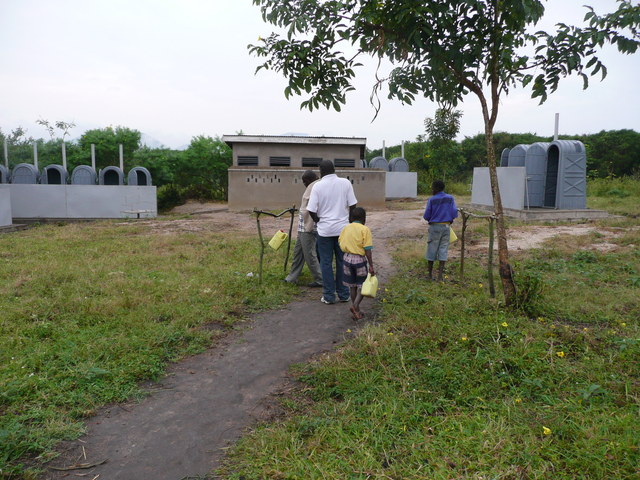
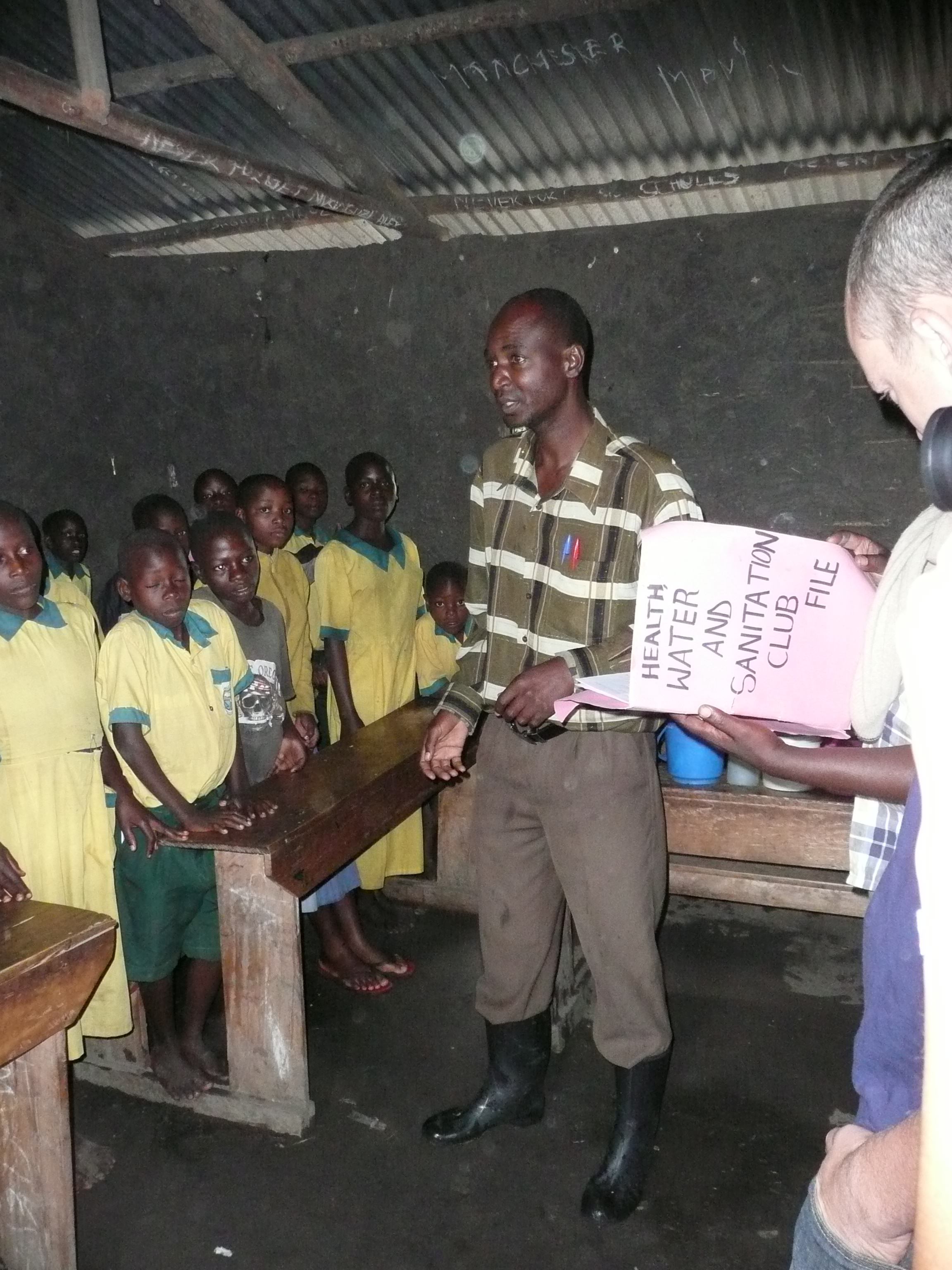
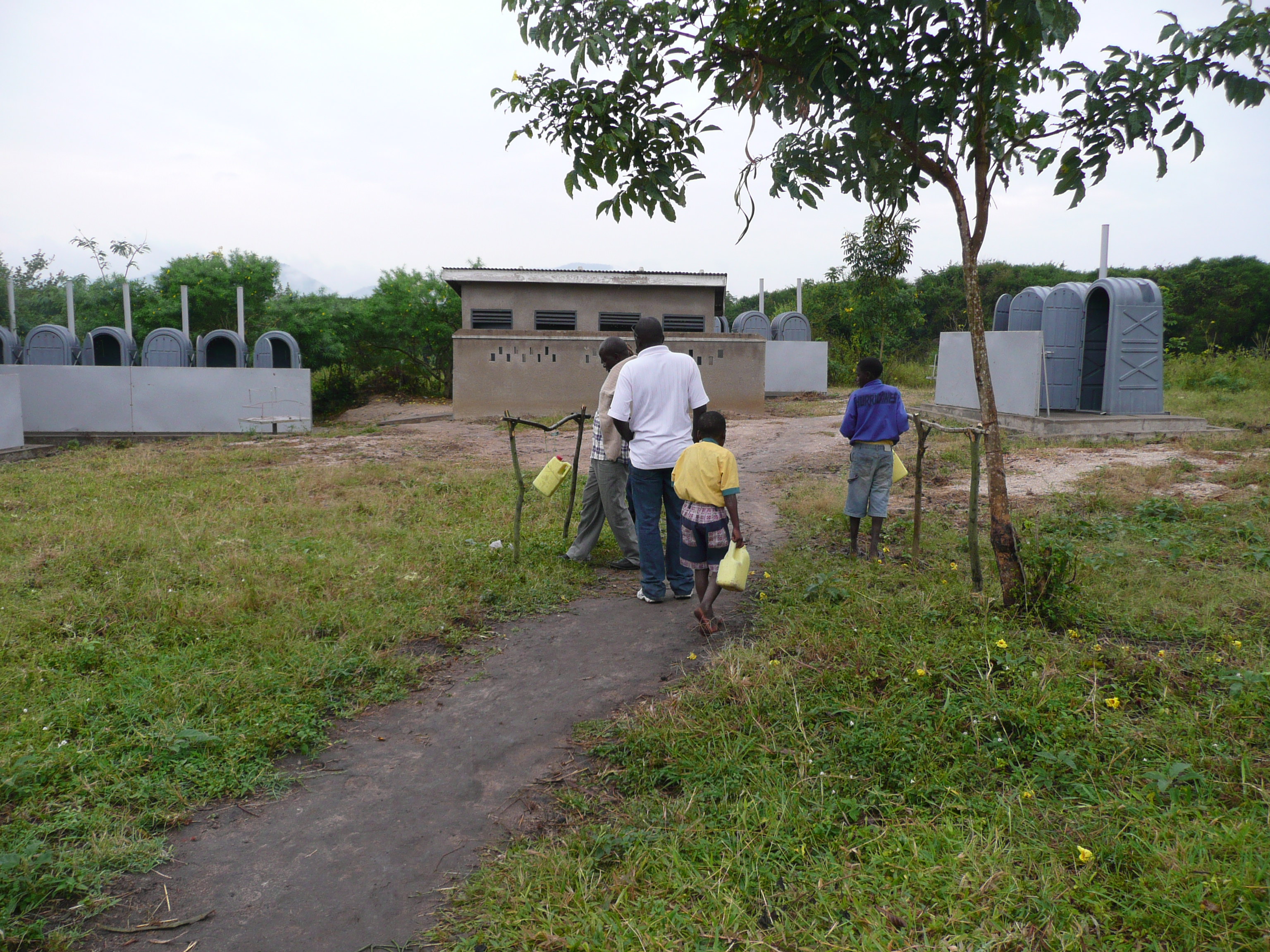
We drove out to Mahyoro Moslem Primary School to see what JESE has done there. They have provided the school with a 4-unit latrine and they began a WATSAN club for grades 3 to 5. We observed the students using a “tippy-tap,” or hand-washing station in front of the latrines, and then the club sang several WATSAN songs for us.
Their WATSAN club assembles its 25 members monthly. These pupils have been taught how to use and maintain the tippy-tap that's located near the school latrines. In the club, they learn about sanitation and hygiene through songs that they in turn teach their classmates. The club is run by WATSAN patrons that JESE has trained, one male and one female teacher. At this school, the WATSAN club has been meeting for two years. The children in the club have all built hand-washing stations in their homes for family use, that the patrons have visited to inspect. They all also report less sickness than before JESE began the WATSAN program at their school.
One of JESE's social workers that trained the patrons, Grace, accompanied us and reported two problems the “tippy-taps” are experiencing are that both hand soap that is supplied and the jerry cans are stolen if left out. To address the problem, students are now mixing OMO (a powdered soap) with water in the can instead of just water and at night they're bringing in the part of the tippy-tap where the jerry can is connected.
I was disturbed to see at this school that UNICEF had constructed 18 latrines in addition to the 4 JESE had previously constructed; for a school of 220 children, this ratio doesn't make any sense. The Kenyan government recommends one latrine per 25 girls or 30 boys - not one per 10 girls. Let's hope the UNICEF representative can collaborate more down the road and avoid wasting funds where they could be better used otherwise.
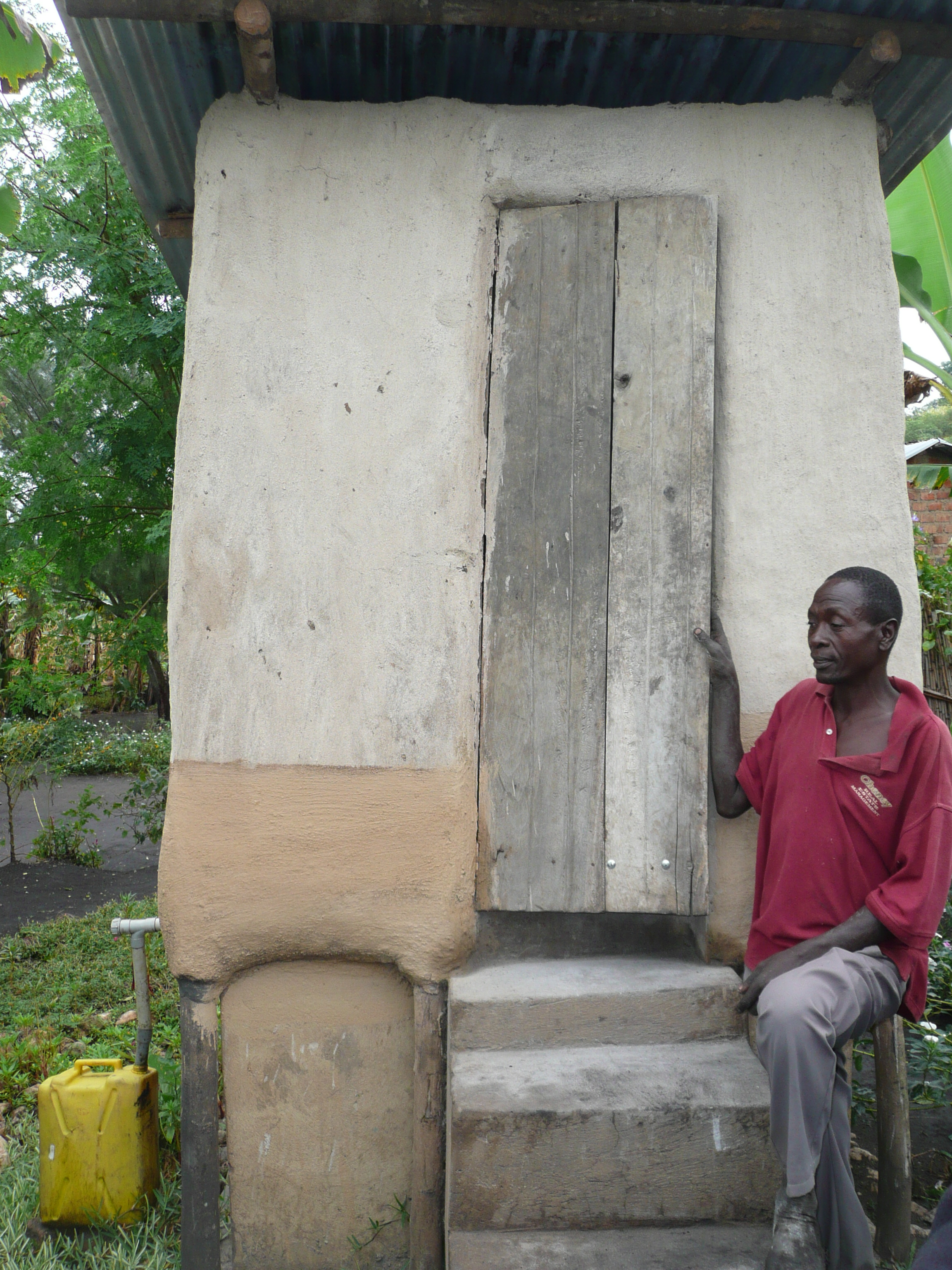
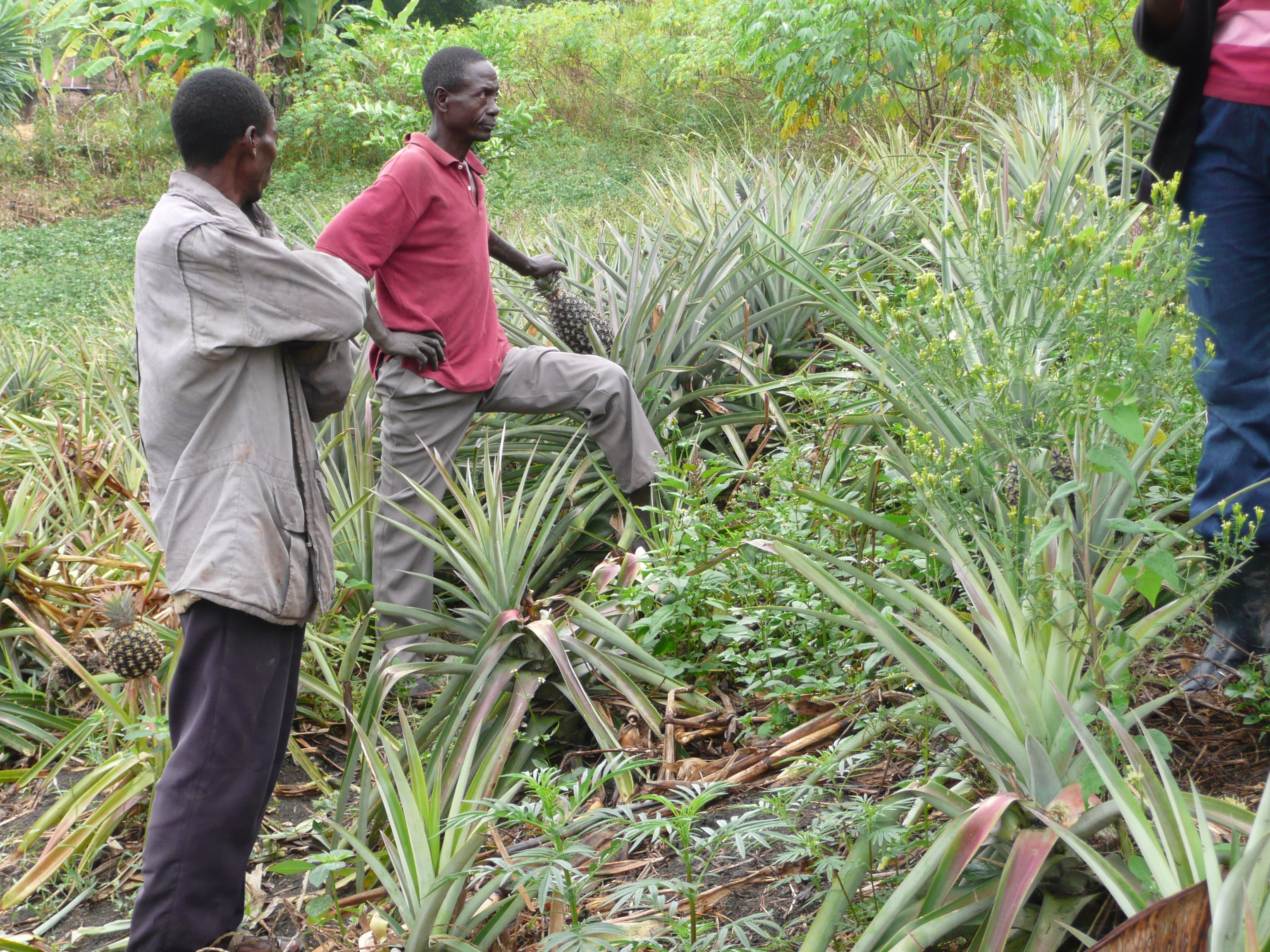
We then visited the home and farm of Ezra Bomotura, featuring an EcoSan latrine. He adopted this technology after he attended a training organized by JESE and participated in an exposure visit in mid-2006. After returning home, JESE provided him with two pounds of cement and he constructed the latrine with local materials. He's just beginning to experiment with using the urine, mixed with water, to irrigate a portion of his pineapple farm. The results he showed us were impressive – the largest pineapples were those watered with the mixture! He's clearly sectioned off where he is and isn't using the mixture to demonstrate, without a doubt, the results to fellow farmers. Through another agricultural JESE training for farmers, Ezra learned to use compost in farming to keep the soil healthy and he showed us the area in his garden where he's doing just that. You can see a marked difference between the soil that's enriched from the compost and the drier, exposed soil without compost. He has also become a Community Development Promoter through JESE.
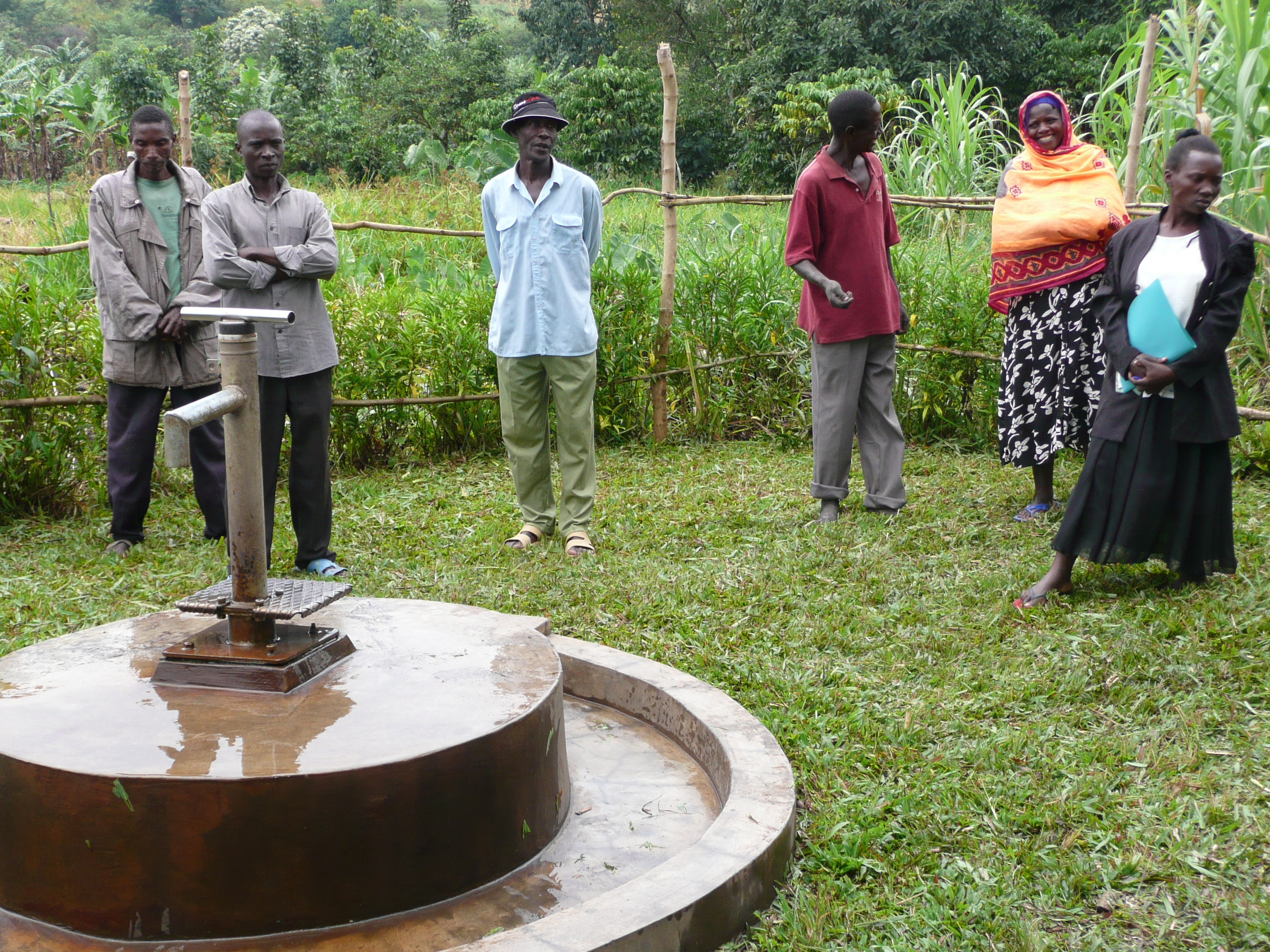
The Vorembo village WATSAN committee showed us their shallow well (of 14 ft) fitted with a Niya hand pump. It's been working since 2006 and they collect quarterly dues of 1,000 Uganda shillings. Something had broken inside the pump, thanks to the savings from collecting dues they were able to repair the part and they now have a balance of 10,000 Uganda shillings. Before they were collecting water at a nearby stream and they've noticed fewer cases of typhoid/diarrhea since they began using the (covered) well. Mr. Bomotura told us about a time that someone had diarrhea and defecated IN the stream....
Next we visited the Mahyoro landing site, or portion of the Lake George shore where fishermen unload their catch of fish, clean their nets and wait during the day to fish illegally at night. JESE has built an EcoSan latrine here that is not being used properly, due to difficulties in properly training the population. The landing site is a challenging location because it involves educating all users on proper usage – and many users do not belong to the community or are transient. While it's a huge improvement for the landing site to have any latrines (because prior to the EcoSan people were defecating openly or in the lake, which is their water source for all uses), the EcoSan is not being used correctly. But we saw a hippo!
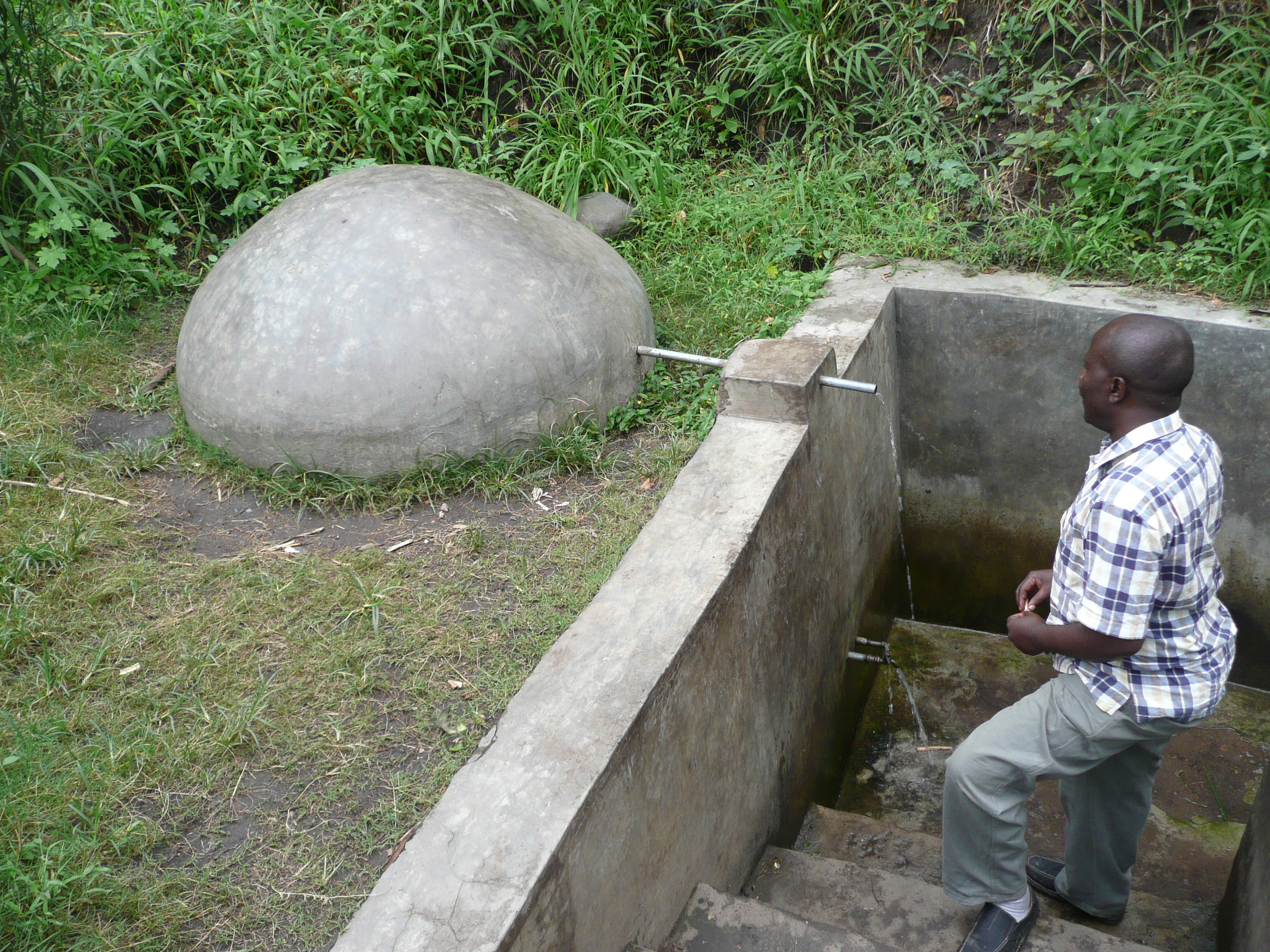
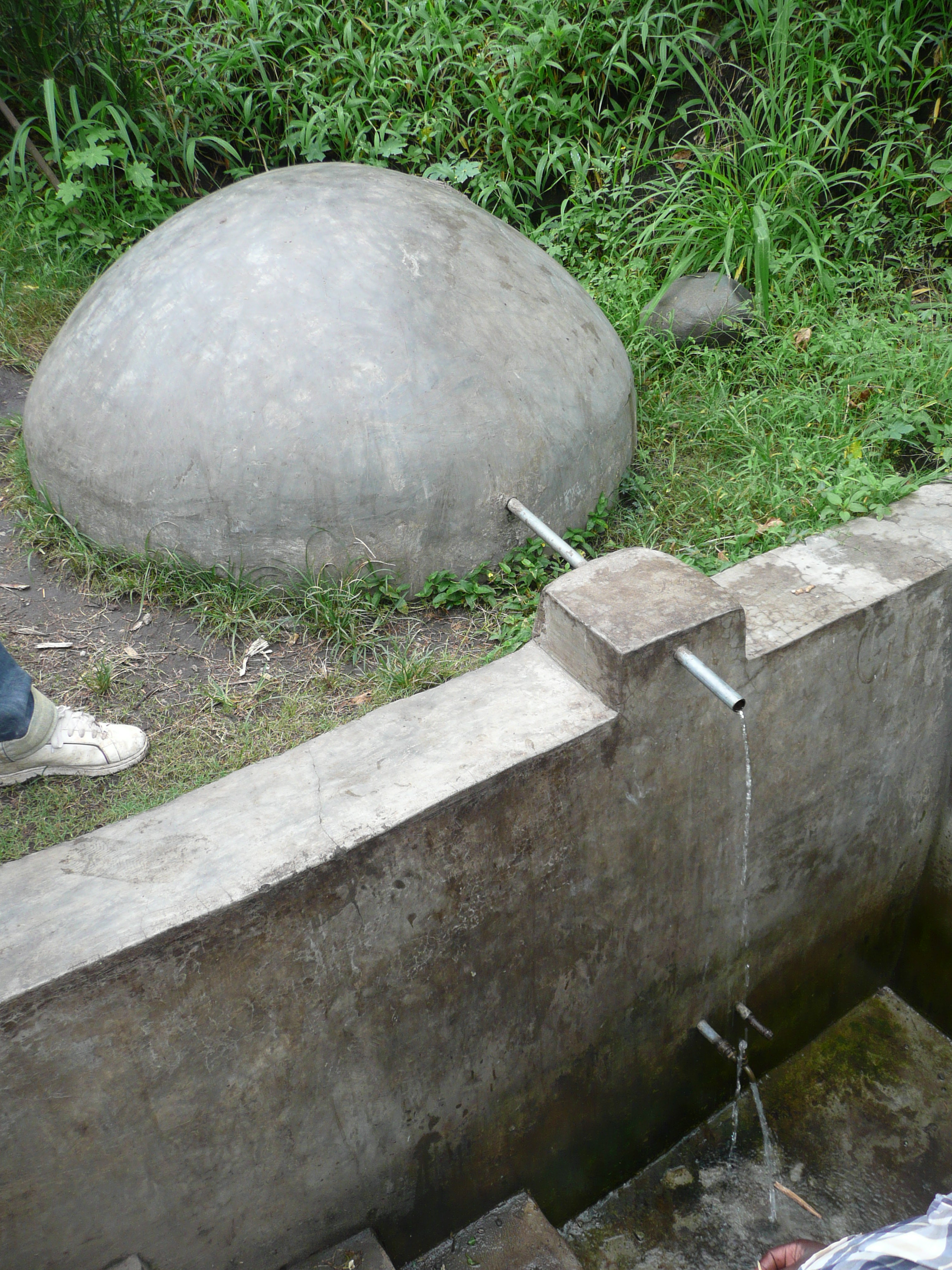
Our last stop was to see an improved spring that JESE completed, including spring capping and a small tank. Only one spigot was functional, but the part that opens/close it was missing so water was flowing/leaking from this spigot. Patrick inserted a piece of wood to stop the flow of water. The collection tank, which was rounded over, was full hence the flowing water. Fifty households are currently using this water source.
This was a great exposure visit to JESE's work and made obvious PROTOS' reasons for working with them – an excellent organization!
-
 Mahyoro_...
-
 Mahyoro_...
-
 Mixing_O...
-
 Mahyoro_...
-
 Ezra_s_i...
-
 Outside_...
-
 EcoSan_p...
-
 Patrick_...
-
 Vorembo_...
-
 Children...
-
 Mahyoro_...
-
 Spring_c...
-
 Storage_...
-
- Implementation Phase Project started on 1 Sep, 2007 Preparation Phase



















Objectives of the project: Operational objective: Sustainable improvement of the living conditions of the rural population through an improved access to drinking water and sanitation;Strategic objective: Stimulation of IWRM in the catchment area of Lake G
Narrative
PROTOS has in partnership with JESE and FORUD been building 39 water points consisting of shallow wells and, protected springs. The implementation of this infrastructure has been done in a participatory approach with clear roles for the local communities (beneficiaries) and local authorities. Community authorities have been trained in tendering and external contractors were granted the works. The beneficiaries were trained to form representing water user committees in the initial phase of the projects in order to improve ownership.
Next to this main infrastructure component of the program PROTOS has integrated other water technologies in its program, being in a smaller scale and for different purposes (not only for human consumption). Good examples are the fish slabs on fishermen landing sites for allowing clean processing of the fish and building Ecosan latrines on public places like landing sites and market places.
Pilots have been done in building rainwater harvesting tanks at both institutional (school) and household level.
Related to hygiene and sanitation knowledge, a lot of effort has been done to create awareness and to sensitize the people in the intervention, using different methods :
- Supporting and equipping drama groups who are performing on H&S topics in the area
- Training the water user committees
- Perform household visits and build demo homes
- Train hygiene promoters and introduce PHAST sessions (Participatory Hygiene And Sanitation Transformation).
- Start school hygiene groups and health classes using C2C (Child to Child) approach
- …
The Hygiene and sanitation component of the program was also linked with the infrastructure component which is again on both institutional level (e.g. multi stance Ecosan in schools and public latrine on market) and household level (mainly household Ecosan toilets). The Ecosan technology has shown to be well accepted after the different sensitization and training being done and its different benefits are more and more understood (use of urine – composted fecal material as compost). Furthermore it was shown that on the landing sites where ground water tables are very high, this technology is the best fit. Even on the District level it was decided that for these areas it is “the” technology to be promoted (allowed) by all development partners.
Last but not least, PROTOS has played a prominent role in creating the first decentralized “Integrated water Resources Management” pilot project in Uganda. Several representatives of involved local district authorities and representatives of LAGBIMO ( Lake George Basin Integrated Management Organisation) were put together on the table with representatives of DWD Directorate of Water Development (body of central authorities Uganda) to form a Catchment Committee for the river Mpanga, the most important river of Lake George basin. They are working together on 4 issues/threaths for the river. It is the first decentralized IWRM Committee working in Uganda: it is closely followed by central authorities and promoted as the good practice case for other basin authorities starting activities.
Sustainability
Creating and measuring long-term impact
The water user committees are collecting money from users as a water user fee has been agreed. In reality it shows that there are many challenges to collect this fee. A survey shows that the collected fees range from 0 USD/year up to 50 USD per year.
Therefore PROTOS started medio 2009 the formation of water user associations in order to group water users from different water points into one bigger group. From this group the income will be made available for microcredits. The project is established in collaboration with the District Water Office and the first results indicate indeed higher revenues. The long term effect is to be examined.
PROTOS is continuing his program in this intervention area and will further focus on the set up of these structures for sustainability of investments.
Other Issues
Unusual and unexpected issues faced during project execution
A lot effort has been done to introduce ecological sanitation (Ecosan) in the intervention zone. At first the technology showed different challenges but the experience in the field shows that different households have now seen the advantages and adopted the technology. This is due to a large effort on sensitization and promoting the advantages (e.g. manure production and protection against collapsing soils) as well as a process to find building options to largely reduce the cost (now a low cost Ecosan is rated at approx 70 – 100 USD).
During the course of the project high increase in the price of some materials has been observed (eg fuel, cement, ..): this has had an impact on the realization of infrastructure.
PROTOS has introduced formal tendering procedures where the local leaders, together with the members of the water users committee of the new water point are trained to tender out the work. The objective was to increase ownership of the target groups and to enforce the different roles of the stakeholders in the implementation process. In reality we see that the number of capable construction companies in these remote intervention areas are limited which results into the fact that the same contractors were often selected.
Learnings
Knowledge of project and process for sharing
In general it has been experienced that public water and sanitation infrastructure show many challenges in their usage. These relate to vandalism on rain water tanks in schools (taps broken/stolen), latrines/Ecosan on markets and landing sites. Therefore in a later the 2ned project stage, priority has been given to household intervention. Some public infrastructure is still being provided such as school Ecosan toilets. This infrastructure has shown to be well used/maintained in this protected environment when the school has successfully installed hygiene groups (through C2C processes).
PROTOS april 13th 2010
Impact
People Impacted: 22379
People Getting Safe Drinking Water: 13125
R1. Period 1/9/2008 – 31/9/2009 : approx. 4750 persons (17 shallow wells and 1 protected spring) Details : 792 families, 387 men, 405 women
4 rainwater tanks in schools or 3335 pupils
Total : 3335 pupils + 40 teachers
Period 1/7/2007 – 31/08/2009: 5000 persons ( 9 shallow wells, 2 protected springs)
School Children Getting Water: 3335
3335 pupils + 40 teachers
People Getting Sanitation: 2267
R2. Ecosan built at school level : 3 (6 stance Ecosans) 1135 pupils + 26 teachers
Household Ecosan built (and households trained) : 51 families or 306 persons
8 public Ecosans built: approx. 800 persons
People Getting Other Benefits: 13159
R2 Different trainings/awareness/sensitization programs on hygiene-sanitation:
Training in schools (C2C) : 12 schools or approx 720 pupils
Training and awareness session at household levels : 1688 households or approx. 10128 persons
Training in villages (PHAST, ..) : 42 PHAST trainers formed, 1604 persons trained
Water user committees trained on H&S : 15 WUC or 525 persons
Village hygiene promoters formed : 54 persons
4 demo homes built with 128 persons trained
Total : software for 13159 persons
R3. Local implementing organizations, authorities and community representatives:
- Local leaders :
o Training on project planning for 118 local leaders on village, subcounty and county level
o Training on tendering for 37 local leaders
o …
- Training and support of 3 local drama groups on hygiene, sanitation and safe drinking water
- Training of a women group on construction of rainwater harvesting tanks for households and construction of 4 household tanks
- Better hygiene on landing site : construction of two fish slabs for cleaning fresh fish
- Cattle holders : water for cattle : construction of 2 drinking throughs on shallow well outlets
- Training of 25 local pump technicians
- Masons trained in construction of household Ecosan : 8
- Households adopting Ecosan technology : 6 household Ecosans and 1 public at school.
R4. Local implementing organizations, authorities and community representatives are informed about Integrated Water Resource Management :
- Representatives of local district authorities , Lagbimo and DWD representatives for IWRM “integrated water resources management “ of Mpanga river in the Lake George basin: 15
Maintenance/Operating Costs Annual, in US$: $3900
Creating and measuring long-term impact
The water user committees are collecting money from users as a water user fee has been agreed. In reality it shows that there are many challenges to collect this fee. A survey shows that the collected fees range from 0 USD/year up to 50 USD per year.
Therefore PROTOS started medio 2009 the formation of water user associations in order to group water users from different water points into one bigger group. From this group the income will be made available for microcredits. The project is established in collaboration with the District Water Office and the first results indicate indeed higher revenues. The long term effect is to be examined.
PROTOS is continuing his program in this intervention area and will further focus on the set up of these structures for sustainability of investments.
Funding
- funded:
- $25,700
- Community:
- $13,600
- Final Cost:
- $622,468
- edit $25,700:
- Blue Planet Network