Self-supporting community- based mitigation program that provides arsenic safe water using modified dugwells along with public education on water related health effects.
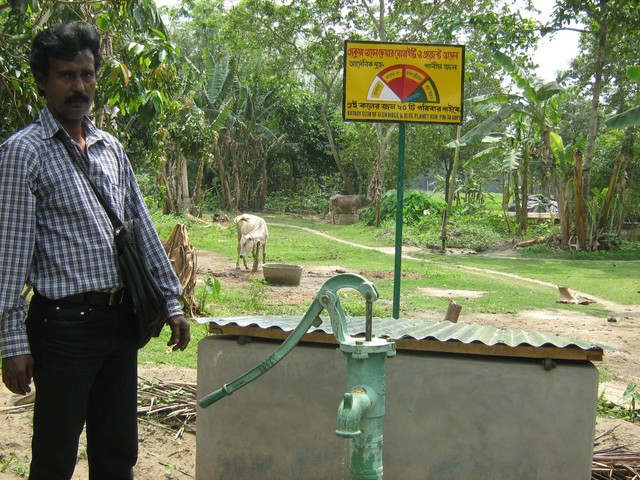


Narrative
In some areas a dugwell may become dry or contain low volume of water due to any of the following factors:
(i) located near a river channel that gets almost dry in summer;
(ii) far distance from a perennial water body;
(iii) due to the amount of annual rainfall.
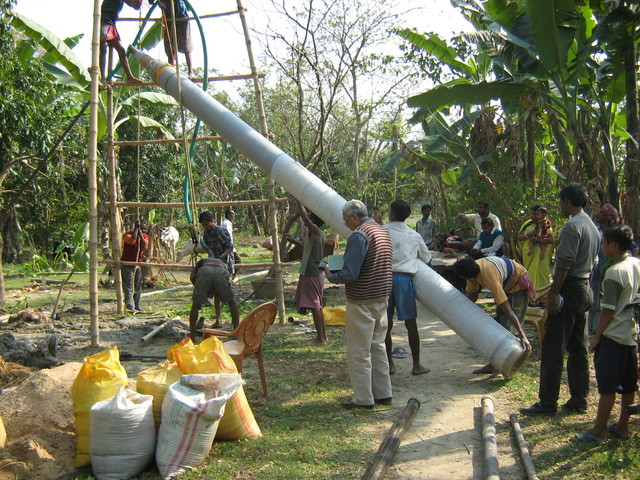
It has been observed that in 2007, 18% of the dugwells in the PWSET1 area were affected. The composition of soil in this part of the region is such that it gets impossible to dig manually due to sand boiling that starts at around the depth of 14 feet. One of the solutions to this phenomenon is to deepen the dugwell. Considering the rural setup where large equipments cannot be transported, the technical advisor developed a new design that has enabled the depth of this dugwell, by overcoming the sand boiling, to 21 feet. The level of water of this dugwell will be observed for 2-5 years.
-
Laltu Mirza of Project WellImplementation Status: completed Sat 28 Sep 2013, Over 12 Years ago
pw74 went for inspection and folder has given.
-
Laltu Mirza of Project WellImplementation Status: completed Mon 12 Aug 2013, Almost 13 Years ago
repaired washer, checkvalve, net and plunger today.
-
Jyotsna Sarkar of Project WellImplementation Status: completed Sat 10 Aug 2013, Almost 13 Years ago
PW-74 water collection for annual arsenic test
-
Jyotsna Sarkar of Project WellImplementation Status: completed Sat 13 Jul 2013, Almost 13 Years ago
There is 22 ft of water.200ml theoline was sold.4families 20 people.used for drinking and cooking. pw_50
-
Shilpi Poddar of Project WellImplementation Status: completed Thu 14 Feb 2013, Over 13 Years ago
Deep of water column 7 feet. 5 families 16 people.
-
Jyotsna Sarkar of Project WellImplementation Status: completed Thu 18 Oct 2012, Over 13 Years ago
15ft of water. 500ml theoline. 8 families 36 people using the water.
- Impact Assessment (M&E) Phase Project completed on 31 Dec, 2008 Implementation Phase
-
Meera Hira-Smith of Project WellImplementation Status: completed Tue 04 Nov 2008, Over 17 Years ago
Visit to the site by the Project Well director on 22nd October 2008
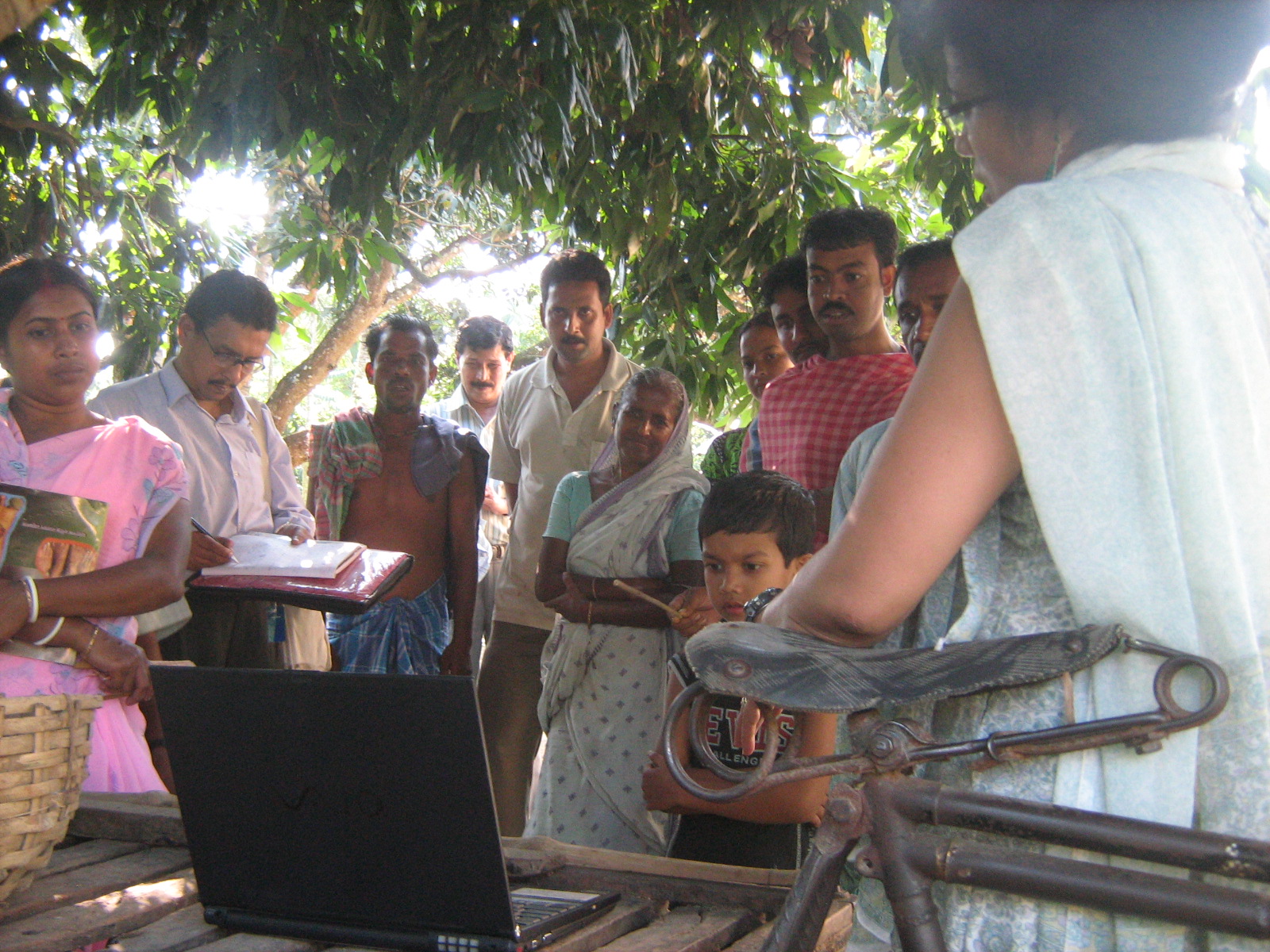
The water of this dugwell, # PW74, is clear and people of the village are using the water for cooking and drinking since June. There is no organic smell in the water. In August the number of families using the dugwell water was 12 and 48 consumers. But in September the users had stopped using the water saying that they were catching cold (hay fever) from drinking the dugwell water. The field workers visited several times to advise them that it is a myth. And on 22nd October we visited PW74 when we found out that the people had stopped for about 15 days, during the typical seasonal allergy (flu / hay fever) period when everybody in the overcrowded areas get sick from the infectious cold virus. The same sickness of 3-4 days is common in the city too. The spread of the cold virus and how to prevent it was explained to the people with the help of a slideshow (picture) and once again told them how the arsenic free dugwell water will protect their health in the long run while water of the arsenic contaminated tubewell would increase their sickness because arsenic affects almost all parts of the body that would result in increase of their medical bill.
-
 IMG_1278...
-
 IMG_1274...
-
- Implementation Phase Project started on 1 Jan, 2008 Preparation Phase


Self-supporting community- based mitigation program that provides arsenic safe water using modified dugwells along with public education on water related health effects.
Narrative
In some areas a dugwell may become dry or contain low volume of water due to any of the following factors:
(i) located near a river channel that gets almost dry in summer;
(ii) far distance from a perennial water body;
(iii) due to the amount of annual rainfall.
It has been observed that in 2007, 18% of the dugwells in the PWSET1 area were affected. The composition of soil in this part of the region is such that it gets impossible to dig manually due to sand boiling that starts at around the depth of 14 feet. One of the solutions to this phenomenon is to deepen the dugwell. Considering the rural setup where large equipments cannot be transported, the technical advisor developed a new design that has enabled the depth of this dugwell, by overcoming the sand boiling, to 21 feet. The level of water of this dugwell will be observed for 2-5 years.
Sustainability
Creating and measuring long-term impact
Initially users are trained to treat water with the disinfectant supplied by field workers of local NGO. Each family to contribute Rs.10 per month for maintenance cost to buy theoline (average Rs.20/- per month) and for repair work if any.
Other Issues
Unusual and unexpected issues faced during project execution
Research and Development is part of the project. The arsenic level was 8 PPB tested on 30th June 2008. The Total coliform and Fecal coliform are both 'undetected'. Date of water collection for bacteria tests was on 6th December 2008.
Learnings
Knowledge of project and process for sharing
The cost of this design, using a special 12" diameter PVC pipe, is 60% more than the Project Well formulated modified dugwell. If this new design works it may be considered in future because it is more important to provide arsenic safe water to the people throughout the year.
Impact
People Impacted: 16
People Getting Safe Drinking Water: 16
According to the register record of January 2013 the total consumers=15; Families=5;
____________________
According to the register record of July 2011 the total consumers=18; Families=6; Male=10, Female=8, children <5 =1 and students = 4.
_________________
According to the register there are 11 families and 46 consumers, Male=26, Female=20 and child <5 =1.
People Getting Other Benefits: 50
Public health education on arsenic health effects and personal hygiene is given to all the dugwell beneficiaries. A training program on the maintenance of the dugwells (including chlorination) is given to develop a sense of ownership and to make the program sustainable. There are five field workers working on the dugwell program who are selected from the arsenic afflicted villages. They are involved in site selection, village meetings during site selection, followed by construction of the wells and also follow up the on the technical faults of the dugwells and the numebr of users. The villagers are also shown VCDs on how to improve personal health and hygeine through proper practices. The office of Aqua Welfare Society is located in the village and the coordinator and the account asistant / data entry person travel from Kolkata to meet with them weekly. Trades like well-digging, pottery, and masonry, are required for the dugwell program and are benefiting from work generated by the project.
Maintenance/Operating Costs Annual, in US$: $40
Creating and measuring long-term impact
Initially users are trained to treat water with the disinfectant supplied by field workers of local NGO. Each family to contribute Rs.10 per month for maintenance cost to buy theoline (average Rs.20/- per month) and for repair work if any.
Funding
- funded:
- $1,171
- Final Cost:
- $1,171
- edit $1,171:
- Blue Planet Network